Security | Threat Detection | Cyberattacks | DevSecOps | Compliance

Account Takeover Fraud in 2026: How Attacks Really Happen and How to Stop Them Before Impact

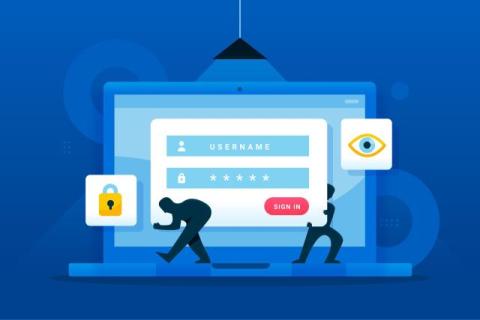
Account takeover (ATO) fraud is a critical threat to digital businesses. Despite heavy investment in MFA and login anomaly detection, many attacks succeed because they bypass traditional safeguards entirely. Modern ATO doesn’t start at the login screen. It begins upstream with pre-login exposure and real-time credential relay, allowing attackers to hijack sessions before traditional defenses even engage.

Defending against deepfake cyberattacks: Why trust is the new security perimeter

Deepfake technology is now a legitimate enterprise level threat. What started as a potentially disturbing AI capability has rapidly become a powerful tool for cybercriminals and one that exploits the most fundamental element of business communication: trust. A new report from Info‑Tech Research Group, Defend Against Deepfake Cyberattacks, breaks down how to understand and assess the risk deepfakes pose to organizations of all sizes.

INETCO team shares fraud predictions for 2026

From real-time payment (RTP) scams to account takeovers to card testing, Visa reports that 98% of merchants experienced one or more types of fraud in 2025. No wonder it has gone down in history as the year these crimes exploded in scope. So what does 2026 have in store? According to the INETCO Team, the coming months will see payment fraud evolve like never before — into something more autonomous and far harder for banks and payment processors to detect using traditional approaches.

My close call with an adoption scam and the red flags to watch for

Adoption fraud can target hopeful families. Discover common scams, warning signs, and how to protect your adoption journey. Adoption fraud can blindside even the most prepared families, especially when emotions run high. Understanding common adoption scams and how to stay safe can help you move forward with more peace of mind. Adoption fraud is a scam in which someone uses deception to extract money, gifts, or emotional leverage from people hoping to adopt.

It's About Time: Why Memcyco Raised $37M, and Why Now

Digital fraud hasn’t stood still. Attackers have adopted automation, refined tooling, and improved coordination across phishing, impersonation, and account takeover (ATO). In that sense, fraud has become smarter in how it’s delivered and scaled. But this form of sophistication isn’t primarily about more complex technical breaches, and it doesn’t explain why losses continue to rise even as enterprises deploy increasingly advanced security controls.

The CTI Pivot: Weaponizing Decoy Data Against Airline ATO

That question reflects a growing reality inside airline security teams. Account takeover is no longer a downstream fraud event. It is an access-layer problem driven by adversaries who specialize in impersonation, reverse proxies, and rapid monetization of loyalty accounts. For Cyber Threat Intelligence teams, the mission is not to clean up after fraud. It is to disrupt adversary capability early, attribute campaigns accurately, and break the kill chain before customer harm occurs.

What is identity muling, and how can you prevent this new fraud vector?

An identity mule is someone who is compensated for sharing their identity. They may be asked for pictures of their identification documents and video selfies. Or, instructed to create an account and complete an identity verification flow before handing over the account’s credentials to a bad actor. The fraud cat-and-mouse game is taking a new turn. As organizations get better at detecting deepfakes, some bad actors are using real people’s identities to commit fraud.

Hiring fraud and deepfakes with Tom Cross

Join us for this week's Defender Fridays as we explore the evolving threat of deepfakes in hiring and remote work with Tom Cross, Head of Threat Research at GetReal Security. At Defender Fridays, we delve into the dynamic world of information security, exploring its defensive side with seasoned professionals from across the industry. Our aim is simple yet ambitious: to foster a collaborative space where ideas flow freely, experiences are shared, and knowledge expands.

As online fraud expands, here's how you can stay ahead

Globally, companies lost an average of 7.7% of their annual revenue to fraud, according to TransUnion’s 2025 Digital Identity Risk Accelerates Fraud Losses report. In the US, companies reported revenue losses of 9.8%, a 46% increase from the previous year. That’s hundreds of billions of dollars heading into the hands of fraudsters. And those stats don’t account for the loss of trust, hit to brand reputation, and time and resources spent on mitigating and resolving the fraud.

The rise of fake job applicants: Why workforce security must start before day one

All over the world, companies are seeing a rise in fake job applicants. You may have experienced it yourself: dozens of near-identical resumes arriving within hours, or candidates who refuse to turn on their camera during video interviews. Remote hiring, global talent pools, AI-generated resumes, and increasingly sophisticated fraud networks have profoundly changed the hiring landscape. Traditional hiring processes were never built to defend against the types of candidate fraud we’re seeing today.