Security | Threat Detection | Cyberattacks | DevSecOps | Compliance

TikTok Content Ideas for Highlighting Smart Digital Habits

In today's digital age, the way we interact online has a profound impact on our daily lives. With platforms like TikTok dominating social media trends, there's a growing opportunity to share meaningful content that educates, entertains, and encourages positive online behavior. Highlighting smart digital habits on TikTok not only informs audiences about responsible online practices but also helps create a culture of awareness, safety, and efficiency in the digital world. If you are a content creator, educator, or simply someone passionate about fostering better online practices, exploring TikTok as a platform can be highly effective.

Attack Surface Management in 2026: The 4 Exposure Layers ASM Can't Cover

Exposure management in 2026 is no longer defined by how many assets you can scan. It is defined by where visibility and control still exist when attacks move from discovery to execution. Most modern attacks do not exploit misconfigurations or unpatched systems. They exploit trust. In fact, according to Statista, the usage of valid credentials is now the joint-top initial access vector globally (30%), tied with software exploitation.

How Liveness Detection Stops Identity Fraud Before It Starts

Identity fraud is no longer a distant problem that only affects big companies or governments. It's happening to everyday people-people like you and me. Have you ever wondered how someone could open a bank account, take a loan, or access services using someone else's face? That's where liveness detection quietly steps in as a digital gatekeeper.

Report: Microsoft Was the Most Impersonated Brand in Q4 2025

Microsoft was the most commonly impersonated brand in phishing attacks during the fourth quarter of 2025, according to researchers at Guardio. Microsoft was followed by Facebook, Roblox, McAfee, Steam, AT&T, Amazon, Google, Yahoo, and Coinbase. “Scammers ramped up brand impersonation attacks throughout Q4 2025, timing their campaigns around when people are busiest online, shopping for deals, renewing subscriptions, or looking for jobs,” Guardio says.

Website vs Device Defenses: How to Build a Modern Account Takeover Solution

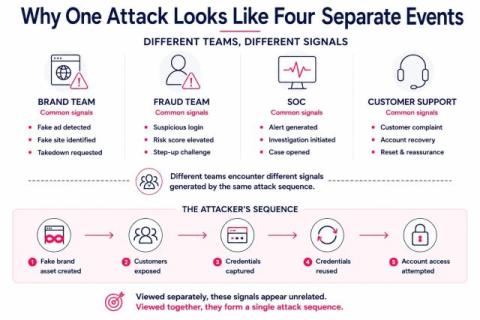
Most account takeover solutions are built on a familiar assumption: if you can trust the device and secure the login, you can stop fraud. That assumption is no longer valid. Modern account takeover failures are driven by a structural issue most defenses still miss: the legitimacy gap. This is the period when access is treated as legitimate even though compromise has already occurred. During this gap, attackers operate freely while security and fraud teams see nothing actionable.

AI Deepfakes Are Impersonating Religious Figures to Solicit Donations

WIRED reports that deepfake attacks are impersonating pastors and other religious figures in order to scam congregations. Father Mike Schmitz, a priest who hosts a podcast with over a million followers, warned his listeners in November that AI-generated deepfakes were using his likeness to fraudulently solicit donations. WIRED found that several of these fake accounts are still active on TikTok, and they appear when a TikTok user searches for Father Schmitz.

How to Spot a Fake Twitch Viewer and Keep Your Channel Safe

Spotting fake Twitch viewers isn't about protecting your channel, it can also be about figuring out how to avoid getting caught if you're buying viewers. Some streamers learn how to identify fake viewers in order to keep their channels safe, yet these viewers (unless in massive numbers) won't necessarily affect channels. They're simply everywhere. On the other hand, people want to learn how to spot bots in order to buy some and go undetected. Either way, with technological advancements in bots these days, the main thing to pay attention to is unnatural behavior.

Domain Takedown Services vs In-House Tools: What Enterprises Actually Use

Domain takedown services are a familiar control for enterprises dealing with phishing, fake websites, and brand impersonation. When a spoofed domain appears, the instinctive response is to remove it as fast as possible. Security teams generally face a clear decision: handle takedowns internally using tools and SOC workflows, or rely on managed domain takedown services. What is less clearly understood is that this decision is not really about preference or maturity.

How to easily protect your identity from theft and fraud

Identity theft is no longer just about lost wallets or stolen credit cards—it’s a growing digital threat that can start with something as simple as opening an email, clicking a link, or sharing information online. Criminals can use your personal data to open accounts, make purchases, or commit fraud in your name, and may also use your information to commit crimes beyond financial fraud, often leaving victims unaware until serious financial or legal damage occurs.