Security | Threat Detection | Cyberattacks | DevSecOps | Compliance

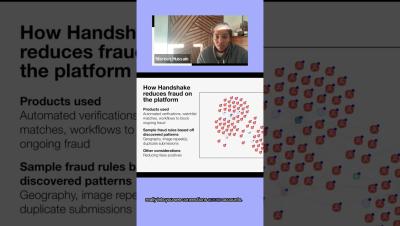
The Bid Picture Featuring Memcyco's Gideon Hazam

This episode unpacks the accelerating threat of phishing, account takeover (ATO), and digital impersonation in the age of AI. Gideon Hazam, Co-Founder at Memcyco, explains why brand impersonation is still treated as “lower urgency” by many organizations, how that blind spot enables real-world fraud, and what preemptive, real-time defense looks like when attackers operate at machine speed.

When Seeing Isn't Believing: AI Images, Breaking News and the New Misinformation Playbook

In the early hours following reports of a U.S. military operation involving Venezuela, social media feeds were flooded with dramatic images and videos that appeared to show the capture of Venezuelan president Nicolás Maduro. Within minutes, AI-generated photos of Maduro being escorted by U.S. law enforcement, scenes of missiles striking Caracas, and crowds celebrating in the streets racked up millions of views across various social media channels. The problem?

Account Takeover Prevention for Credit Unions: What Actually Works in 2026

Account takeover prevention for credit unions has reached an inflection point. One concept underpins most modern failures: the timing gap, the period between a member engaging with a scam or impersonation interaction and the moment a security or fraud team becomes aware of risk. During this gap, access is often treated as legitimate even though compromise has already occurred.

New ConsentFix Technique Tricks Users Into Handing Over OAuth Tokens

Researchers at Push Security have observed a new variant of the ClickFix attack that combines “OAuth consent phishing with a ClickFix-style user prompt that leads to account compromise.” The technique, which the researchers call “ConsentFix,” tricks victims into copying and pasting a localhost URL containing an authorization token, then pasting it into a phishing page.

Fraud Team Postmortems and Account Takeover Prevention

Fraud analysts know the pattern too well. After an account takeover incident, the postmortem confirms what happened. A stolen credential was used. A bot executed a replay. A mule account attempted a transfer. Yet the origin of the compromise remains unclear. The postmortem becomes an autopsy on a loss that already occurred. The core issue is the Window of Exposure.

Most Parked Domains Lead Users to Scams or Malware

Over 90% of parked domains now direct users to malicious content, compared to less than 5% a decade ago, according to researchers at Infoblox. “Parking threats are fueled by lookalike domains,” Infoblox explained. “No domain is immune. When one of our researchers tried to report a crime to the FBI’s Internet Crime Complaint Center (IC3), they accidentally visited ic3gov. Their phone was quickly redirected to a false “Drive Subscription Expired” page.

Social Engineering Tactics 2026: How Attackers Are shifting from Email to 'Swipe-Up' Scams

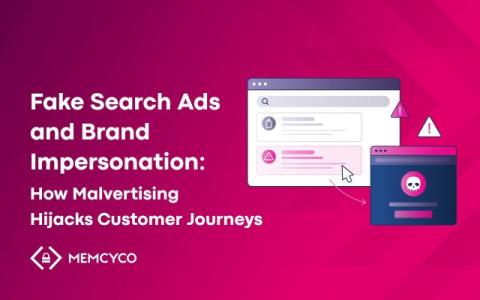
The image of the cyber attacker is changing. For years, the industry focused on email gateways and typo-squatted domains like citi-bank-security.com. But according to Tzoor Cohen, CTI Lead at Memcyco, the battleground has shifted. In 2026, the most dangerous social engineering tactics typically don’t start in an inbox. They start on social media, utilize legitimate infrastructure like Bitly, and exploit the user interface (UI) of mobile devices to hide malicious intent.

How to Spot and Avoid Scams: A Holiday Survival Guide

Can you believe it? The holiday season is finally here! For many of us, that means nostalgic traditions, quality time with family, and—let’s be honest—a significant amount of online shopping. The convenience of browsing for gifts from the comfort of our homes is undeniable, especially in our hybrid work environment. However, this surge in digital activity and scams also signals the busiest time of year for cybercriminals.

Deepfake Cyber Fraud Attacks: Risks, Examples, and Prevention

Artificial Intelligence (AI) has been a revelation. It has changed the way things are done. AI is being used in almost every industry because it speeds up the ability to perform tasks and reduces the chance of errors. But there is a dark side to this highly advanced technology. Scammers are using AI to create sophisticated attacks and are achieving success with them. Deepfake cyber fraud attacks are one such type where malicious actors use deep learning techniques and AI to manipulate existing media.