Security | Threat Detection | Cyberattacks | DevSecOps | Compliance

Cyber War is Already Here. CISOs Must Prepare for Cyber Conflict

Cyber warfare isn’t coming—it’s already here. This conversation on The Cyber Resilience Brief dives into the Fifth Domain of Warfare—and why nation-state cyber activity should matter to every organization. From Russia’s chaos-driven campaigns to China’s long-game persistence, Iran’s retaliatory attacks, and North Korea’s financial theft—your network isn’t a bystander.

How to Protect Telematics Systems from Cyberattacks?

Telematics systems face elevated cybersecurity risks due to continuous connectivity between vehicles, cloud servers, and users. This constant data exchange expands the attack surface across fleet operations, making these systems attractive targets for cyber threats. Cyberattacks on telematics infrastructure can expose sensitive data such as vehicle locations, driver behavior, operational workflows, and personal information. When compromised, this data can disrupt fleet operations, damage trust, and create serious compliance and regulatory risks.

Initial Attack Vectors: How Most Cyber Attacks Begin

Malicious actors use different tactics to launch cyberattacks, commonly referred to as attack vectors. They exploit misconfigurations, weak controls, and other poor security practices to gain unauthorized access to victims’ systems. There is a document co-authored by cybersecurity authorities from various countries, like the US, Canada, the UK, the Netherlands, and New Zealand. It is released by CISA (Cybersecurity and Infrastructure Security Agency).

Domains, DNS and Forgotten Risks in Modern Security Stacks

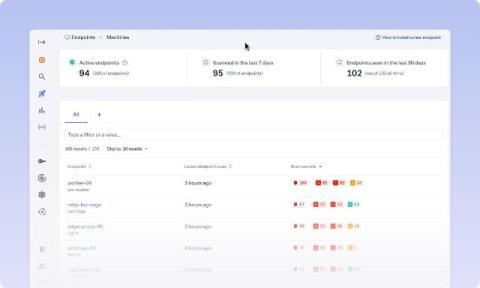
When most cybersecurity teams map their threat landscape, they start with endpoints, users, cloud environments and network layers. It's a solid strategy - but it leaves one critical layer wide open: the domain and hosting infrastructure everything else depends on.

AI-Enabled Cyber Intrusions: What Two Recent Incidents Reveal for Corporate Counsel

This article was authored by Daniel Ilan, Rahul Mukhi, Prudence Buckland, and Melissa Faragasso from Cleary Gottlieb, and Brian Lichter and Elijah Seymour from Stroz Friedberg, a LevelBlue company. Recent disclosures by Anthropic and OpenAI highlight a pivotal shift in the cyber threat landscape: AI is no longer merely a tool that aids attackers, in some cases, it has become the attacker itself.

Behavioral Threat Detection: Identifying Attacks That Blend into Normal Activity

Some attacks are easy to spot. Others aren’t. In many cases, nothing obviously breaks or crashes, and no malware ever shows up. Nothing looks wrong at first. Access appears normal, and systems continue to run as usual. Modern attacks are challenging to detect because attackers often use the same tools and access paths as legitimate users. In addition, attackers remain low-key and use access that appears normal.

Agentic AI Security: How Microsoft Prevents Autonomous Agent Attacks?

As agentic AI systems move into the mainstream—powered by tool calling, MCP, and autonomous workflows—security is no longer a “nice to have.” It’s mission-critical. In this episode, we sit down with Raji, Principal Engineer & Manager for AI and Safety at Microsoft, to deep-dive into the rapidly evolving world of AI security, autonomous agents, and enterprise governance. Discover how Microsoft identifies and mitigates risks in agentic AI, distinguishes AI Security vs AI Safety, and enables organizations to deploy autonomous systems safely at scale—without slowing innovation.