Security | Threat Detection | Cyberattacks | DevSecOps | Compliance

How Cybersecurity Compliance Differs Between the US and EU

Anyone who's tried to build a privacy policy for a company that works in more than one country knows that it can be a headache, the rules aren't the same everywhere, in fact, they're often not even close. The United States and the European Union, two of the most influential regions when it comes to digital regulation, don't treat cybersecurity or privacy the same way, some of that comes down to culture, the rest is law.
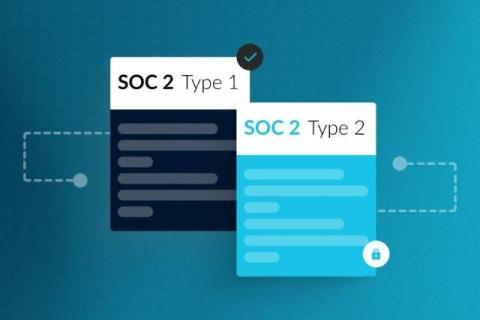

SOC 2 Type I vs Type II: Which One Does Your Business Need?

If you’ve been Googling things like “Do I need SOC 2 Type 1 or Type 2?” you’re not alone. It’s one of the most common questions we hear from businesses tackling SOC 2 for the first time. Whether you're a fast-growing SaaS start up, a fintech navigating due diligence, or a healthcare platform handling sensitive data, getting a clear handle on the difference between Type I and Type II can save you serious time, money, and frustration.

Beyond PCI and HIPAA: How Feroot Powers California Invasion of Privacy Act (CIPA) Compliance

Yes—if your website, app, or other online platform interacts with users located in California, CIPA may apply, even if your business is not physically based there. Enforced under California Penal Code §§ 631, 632, 632.7, and 637.2, CIPA was originally designed to stop wiretapping and unauthorized call recording. Courts are increasingly applying it to digital communications, including web chats, form submissions, and user behavior tracking. The challenge?

COPPA Compliance - Now!

On June 23, 2025, the Federal Trade Commission’s sweeping amendments to the Children’s Online Privacy Protection Rule (COPPA) took effect, ushering in more stringent duties for any operator collecting or using children’s data—whether via websites, services, or AI‑powered agents. Companies must achieve full compliance by April 22, 2026 (Finnegan | Leading IP+ Law Firm, Bass, Berry & Sims PLC).

The Role of AI Custom Solutions in Modern Financial Services

AI has been hard at work redefining the limits of what can be done in almost every industry, but in finance, the stakes and the payoff are especially high. Algorithms are used to make decisions that used to be made by experienced analysts, such as in fraud detection and portfolio optimization. However, the distinction between merely applying AI and actually taking advantage of it is sometimes as simple as a single factor - customization.

PCI SSF Compliance Explained: Infographic for Payment Software Vendors

In today’s rapidly evolving digital payment landscape, software security is no longer just a best practice—it’s a necessity. The PCI Software Security Framework (PCI SSF) sets the global benchmark for safeguarding payment applications and ensuring they are developed with security at the core. Whether you’re creating payment gateways, POS applications, or mobile payment apps, compliance with PCI SSF demonstrates that your software meets stringent security requirements.

ISO 27001:2022 Requirements Explained for 2025

ISO/IEC 27001:2022 provides a framework for managing information security using an Information Security Management System (ISMS). The October 2025 deadline to upgrade from the previous ISO 27001:2013 standard is coming fast, and organizations yet to transition risk losing their certification. Maintaining ISO/IEC 27001 certification is especially relevant for regulated industries, SaaS providers with enterprise customers, and global organizations handling sensitive data.

Why is now the time to modernize first-party risk programs

In this article Senior leaders must remain vigilant in assessing both external and internal threats to their organizations. With emerging technologies, an ever-increasing interconnectedness, and the growing sophistication of cybercrime, risk management has become more complex and dynamic than ever before. As companies prepare for new challenges, 2025 is emerging as a critical year to modernize first-party risk programs.

BIN checkers: tools that keep online payments secure

BIN (short for Bank Identification Number) refers to the first six digits of a payment card number. These digits reveal the issuing bank's country, card type, and payment network. BIN Checker services let businesses verify this information before a payment is processed, helping prevent errors, detect potential fraud, and avoid costly failed transactions. This guide reviews three popular BIN Checker tools and shows how companies are using them to save money and time.