Security | Threat Detection | Cyberattacks | DevSecOps | Compliance

The ultimate security questionnaire guide for vendors: Simplify compliance & build trust

In this article If you’re like 98% of organizations, you have at least one vendor that’s had a breach in the last two years. Although this doesn’t necessarily mean affiliated organizations were affected by the breaches, it does emphasize the extensive range and proximity of potential exposure to indirect risks. Vendors must develop a deep understanding of security questionnaires and implement best practices.

How have you seen successful organizations integrate HIPAA compliance into their everyday operations rather than treating it as just an annual audit requirement?

In this article Organizations that treat HIPAA compliance as a living, breathing part of their operations, not just an annual checkbox, are the ones best positioned to protect patient data, mitigate risk, and build enduring trust with patients and partners.

Why Saudi Arabian Banks Demand Tighter Payment Security?

If you’ve been running a business in Saudi Arabia that accepts card payments, you’ve probably noticed banks getting more strict about payment security. It’s not just a random policy change, there’s a bigger story here, and understanding it could save your business from serious trouble.

Unlock seamless HIPAA compliance in multi-cloud environments with TrustCloud

In this article Organizations that treat HIPAA compliance as a living, breathing part of their operations, not just an annual checkbox, are the ones best positioned to protect patient data, mitigate risk, and build enduring trust with patients and partners.

Cybersecurity in Fintech. Why Is It Important?

Financial technology has transformed the way people and businesses manage money. Mobile banking, online investment platforms, and payment apps are now part of daily life. Yet with this convenience comes an increased risk of cyberattacks. Sensitive financial data is a prime target for hackers, making cybersecurity in fintech not just a priority but a necessity. Even fintech API providers play a critical role in ensuring data is securely exchanged between platforms and applications. Without strong protection measures, the trust that fuels fintech growth could erode quickly.

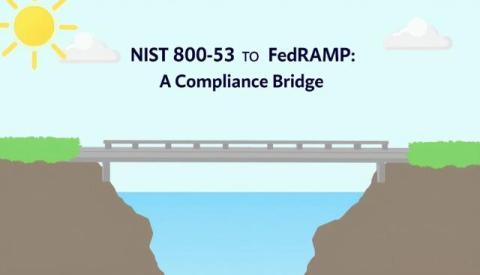
From NIST 800-53 to FedRAMP: What it really takes to bridge the gap

In this article If your cloud platform is already compliant with NIST SP 800-53, you’ve laid important groundwork for security and risk management. But when the goal shifts to serving U.S. federal agencies, the bar is raised significantly. That’s where FedRAMP enters the picture. While FedRAMP is built on NIST 800-53, the two are not interchangeable. FedRAMP adds a layer of rigor, documentation, and oversight specifically tailored to the requirements of the federal government.

Beyond PCI and HIPAA: How Feroot Powers Australian Privacy Act (APA) Compliance

Yes—if your website collects data from individuals located in Australia, the Australian Privacy Act (APA) may apply, even if your company is not based there. This law is enforced by the Office of the Australian Information Commissioner (OAIC) and governs how “APP entities” handle personal information—including that collected by websites, apps, scripts, and third-party services.

Implementing Robust Security Protocols for Agentic AI Autonomy

In this new wave of machine-driven decision-making, the paradigm shift in artificial intelligence towards increasing autonomy is becoming increasingly significant. Autonomous or agentic AI systems, those capable of acting on their own and acclimatising themselves to new environments, are redefining the space by taking actions towards a goal without direct human intervention. Although this is exciting in terms of what it will enable for AI driven processes and creativity, it also introduces a more advanced set of security risks to contend with when dealing with autonomous based AI systems.
Featured Post

Moving Beyond Compliance to True Resilience

Organisations can no longer afford to rely solely on achieving compliance as a defence strategy. Cyber threats are not only more sophisticated, they are relentless. While regulatory compliance sets a baseline, true cyber resilience demands a proactive, layered approach. Businesses must not only pass audits but also recover seamlessly from cyber-attacks to avoid disruption to business continuity.