Security | Threat Detection | Cyberattacks | DevSecOps | Compliance

Is a SOC 2 Report Enough to Assess a Cloud Vendor?

A vendor sends over a SOC 2 report. It lands in the queue, someone reads the cover page, sees the auditor's name and a clean-looking opinion letter, and marks the assessment complete. The reviewer moves on to the next vendor. Multiply that by a few hundred vendors a year, and it becomes less of a decision and more of a reflex.

From all-or-nothing to task-based OAuth consent

Since June, developers have created thousands of third-party OAuth apps on Cloudflare, with more than a million authorizations since. OAuth makes delegated access possible. It lets applications act on a user’s behalf without asking them to handle long-lived credentials or hand over a password. That model works well when an application can describe its access needs with a small set of scopes. Developers use OAuth for SaaS integrations, internal tools, CLIs, and agents.

A revisit of remote Spectre attacks on Cloudflare Workers

In 2021, we assessed remote Spectre attacks against Cloudflare Workers. Based on the results, we shipped a production defense called Dynamic Process Isolation (DyPrIs), which identifies maliciously looking scripts and isolates them into separate processes. Since then, newer techniques in the area of stabilizing Spectre attacks have been discovered. To understand if these techniques posed a threat to our Workers production environment, we decided to internally reassess the remote Spectre attack.

BGP Role model: tracking the adoption of RFC 9234

Route leaks push traffic down paths it was never meant to take. We have written and spoken publicly in the past about route leaks in Border Gateway Protocol (BGP), depicting these events as impactful incidents that cause misdirection of traffic through unintended network paths. BGP routing is driven by the relationships between Autonomous Systems (ASes), i.e., customer-provider and peer-peer.

Top Atlassian Cloud Apps to Get the Most Out of Your Setup

Atlassian has ended new Data Center (DC) license sales and continues to prioritize Cloud for new customers. If you’re already using a data center, you have to plan your migration to the Cloud. And if you’re buying your first license, Atlassian Cloud is the only option. That shift comes with multiple benefits, like agility, scalability, and lower cost overhead. However, your DC environment, being on-premise, gave you more direct control over security.

On-Premise vs. Cloud IGA: How Do You Choose the Right Deployment for Your Organization?

Choosing the right deployment model for your Identity Governance and Administration (IGA) system is a high-stakes decision that affects many aspects of your organization. It determines how you manage access across your entire enterprise. It also dictates your audit readiness and integration capabilities. Now you might assume that the cloud is the only modern option. However, many organizations are changing their infrastructure strategies.

Secure all your internal vibe-coded applications - in one click

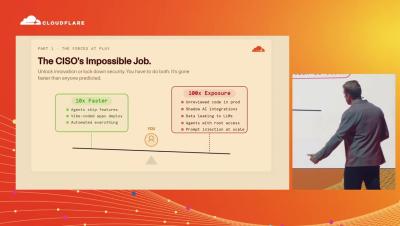
AI has enabled employees across every team to build applications faster than ever before. But that speed is also what's keeping every CISO up at night: any employee can build an application, deploy it to the public Internet, and accidentally expose internal work or company data. Today, we're launching new tools to make it easy to keep your applications hosted on Workers private.

How Cloudflare detects MCP traffic and helps secure it

Most companies designed their resource permissions with a human user in mind. A senior engineer may be able to deploy to production, query a sensitive database, or revoke another user's access. Those privileges come with risk, but that risk has traditionally been bounded by two assumptions: the engineer will use human judgment, and the engineer can only act at human speed.

Certificate Transparency Monitoring is now generally available

Since we launched Certificate Transparency Monitoring in public beta in 2019, we've been emailing subscribers whenever a new TLS certificate appears in a public Certificate Transparency (CT) log for one of their domains. Today, it's turned on for more than 650,000 customer domains. It's an early warning that someone, somewhere, has issued a certificate for a hostname in your zone, giving you a chance to spot a mis-issued certificate early.