Security | Threat Detection | Cyberattacks | DevSecOps | Compliance

8 Best Encrypted Email Services to Protect Yourself With In 2026

Most successful hacks and data breaches are perpetrated through email. In a perfect world, everyone would find safer methods for communication, but since email isn't going anywhere anytime soon, encrypted email is our best option. Since Internxt doesn't have its own encrypted email yet, we've assembled a list of the best encrypted email services you should use in the meantime.


Certificate Transparency Monitoring is now generally available

Since we launched Certificate Transparency Monitoring in public beta in 2019, we've been emailing subscribers whenever a new TLS certificate appears in a public Certificate Transparency (CT) log for one of their domains. Today, it's turned on for more than 650,000 customer domains. It's an early warning that someone, somewhere, has issued a certificate for a hostname in your zone, giving you a chance to spot a mis-issued certificate early.

The Cloud Controls Matrix (CCM): Manual vs. AI-Assisted Vendor Assessment

Most teams that assess cloud vendors already have a general idea of the Consensus Assessment Initiative Questionnaire (CAIQ) and Cloud Controls Matrix (CCM). However, you may not have a good answer for what it takes to run that assessment. Turning a vendor's trust center page, SOC 2 report, and security policy into a structured, defensible view of CCM control coverage is a different problem entirely.

AI Can't Do CTEM Alone (And Neither Can You)

AI can meaningfully power Continuous Threat Exposure Management (CTEM), but only for specific stages of the cycle: prioritization, validation, and remediation routing. AI can’t replace the underlying data integration work, and it can’t turn CTEM into a single product, because Gartner defines CTEM as a continuous five-stage program (scoping, discovery, prioritization, validation, mobilization), not a tool you install.

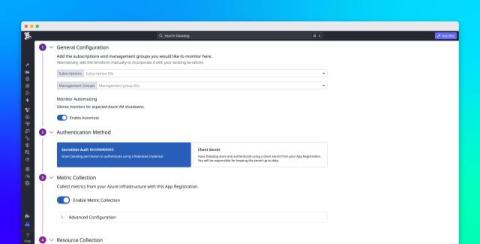
Avoid Azure secret rotation with secretless authentication

Many observability platforms authenticate to Microsoft Azure by using client secrets. Teams must create, store, and periodically rotate these secrets to keep receiving the telemetry data that they need. This recurring maintenance adds operational overhead and increases the risk of ingestion outages that occur when secrets expire.

Automate Inactive User Suspension with JumpCloud Workflows

Say goodbye to manual offboarding checks and dormant account risks! Join Derek Johnson as he demonstrates how to leverage JumpCloud’s user inactivity rules and Directory Insights (DI) trigger events to instantly automate account suspensions, group isolations, and admin notifications. We walk through configuring inactivity thresholds, mapping JSON parameters, and executing a live test run so you can streamline your IT operations today.

Cloudflare DDoS Threat Report H1 2026: 1 Tbps attacks soar as DNS floods and geopolitical tensions drive a new wave

Welcome to the 25th edition of Cloudflare's DDoS Threat Report. This is the first half-year edition in the series: rather than publishing separate reports for the first and second quarters of 2026, we have combined our coverage of Q1 and Q2 into a single volume covering January through June 2026.

What Is CSPM? Cloud Security Posture Management

The shift to cloud-native infra has broken the traditional perimeter security model. Modern cloud environments are dynamic, heavily distributed, and identity-driven, creating security challenges that conventional security tools were never built to address. Traditional SIEM and vulnerability management tools lack native capabilities to detect issues in IAM policies, S3 bucket ACLs, or the blast radius of a misconfigured Kubernetes node pool.

Serving the most critical missions: Cloudflare for Government achieves FedRAMP Class D (High) Certified status

We believe the Internet must be a force for good, and that it requires a foundation of trust. Nowhere is that trust more critical than in public service. Government agencies are the stewards of a nation’s most sensitive data. They protect national security, critical infrastructure, and the personal information of every citizen. Cloudflare’s mission is to help build a better Internet.