Security | Threat Detection | Cyberattacks | DevSecOps | Compliance

Beyond the Blind Spot: Achieving Data Mastery with Netskope at Currys

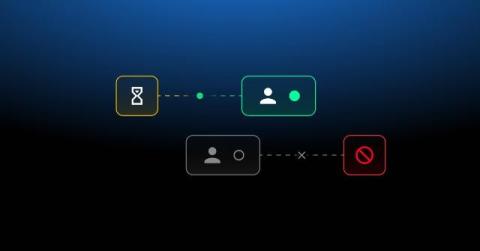
You can’t control what you can't see. Currys is fixing this, using data analytics and data stitching to correlate information across various endpoints to create a holistic view of its cloud environment. Netskope provides the core technology and DLP engine that powers Currys data protection strategy. Together, they built a mature data loss prevention (DLP) strategy, a model which is user-centric, allowing the business to drill into specific user behaviors rather than just focusing on applications.

How Cloudflare responded to the "Copy Fail" Linux vulnerability

On April 29, 2026, a Linux kernel local privilege escalation vulnerability was publicly disclosed under the name "Copy Fail" (CVE-2026-31431). Cloudflare’s Security and Engineering teams began assessing the vulnerability as soon as it was disclosed. We reviewed the exploit technique, evaluated exposure across our infrastructure, and validated that our existing behavioral detections could identify the exploit pattern within minutes.

How to Harden AI Agents in Cloud Environments: The 9 Capabilities Your Stack Must Provide

Most “hardening” advice for AI agents is a checklist of things to configure before the agent runs. CIS Kubernetes Benchmark gates. Pod Security Standards baselines. NetworkPolicy templates. None of it’s wrong — it’s just one of four phases, the one your stack already covers. The other three are Observe, Enforce, and Reconcile. They’re where AI agents actually get breached, and they’re where most stacks have nothing.

Why WatchGuard Acquired Perimeters.io: Making Cloud Security Work for MSPs

If you ask any MSP what they use to protect their clients’ cloud environments, you will get one of two answers. Either they’ll point to the native security tools built into platforms like Microsoft 365 or Google Workspace. Or they’ll describe a patchwork of different products stitched together to cover identity, configuration, and SaaS visibility. Neither approach is ideal. But both reflect the reality MSPs are working with today.

When DNSSEC goes wrong: how we responded to the .de TLD outage

On May 5, 2026, at roughly 19:30 UTC, DENIC, the registry operator for the.de country-code top-level domain (TLD), started publishing incorrect DNSSEC signatures for the.de zone. Any validating DNS resolver receiving these signatures was required by the DNSSEC specification to reject them and return SERVFAIL to clients, including 1.1.1.1, the public DNS resolver operated by Cloudflare. The country-code top-level domain for Germany, .de, is one of the largest on the Internet.

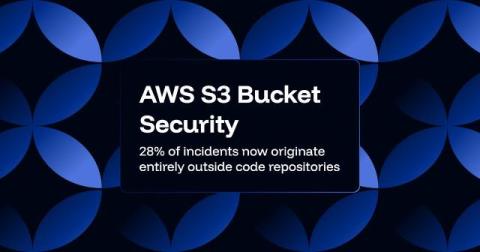
Introduction to Amazon S3: How Object Storage in the Cloud Works

Amazon Simple Storage Service (S3) is a popular cloud storage service part of the Amazon Web Services (AWS). Amazon S3 cloud storage provides high reliability, flexibility, scalability and accessibility. The number of objects and the amount of data stored in Amazon S3 is unlimited. S3 cloud storage is attractive for business because you pay only for what you use. However, terminology and methodology may lead to misunderstanding and difficulties for new Amazon S3 users. Where is S3 data stored?

Building a Future-Proof Cloud Strategy Without VMware

For two decades, VMware was the default answer for virtualization. It worked, it was well supported, and the commercial terms were predictable enough that infrastructure strategy could largely ignore the underlying platform and focus on workloads. Broadcom’s acquisition ended that. Perpetual licences are gone. Product catalogues have collapsed from 168 offerings into four mandatory bundles. Per-core minimums have created fixed costs for capacity many organisations don’t use.

How Cloud Technologies Support Business Expansion

Growing a business feels exhilarating, right up until your infrastructure starts buckling under the pressure. With more customers, new markets, and distributed teams across time zones, the strain becomes very real, very fast. Cloud business expansion stopped being a buzzword years ago. It's now the practical foundation companies depend on to grow without everything falling apart. This shift isn't just a passing phase; it reflects how modern businesses scale, stay flexible, and keep operations running smoothly as demands increase.