Security | Threat Detection | Cyberattacks | DevSecOps | Compliance

The Trillion-Dollar AI Bet Needs a Security Strategy

AI agents have now proven, in the real world, that autonomy without a security model is a liability. At Arctic Wolf, we’ve spent years watching that same lesson play out with cloud migrations, remote work, and every other rush of new technology, and this is that pattern showing up again, just faster.

Zero Standing Privilege vs Least Privilege: What's the Difference?

The main difference between Zero Standing Privilege (ZSP) and least privilege is that least privilege limits the amount of access an identity has, whereas ZSP limits both the amount of access and its duration. Least privilege grants every user or machine only the minimum permissions necessary to do its job, but those permissions tend to persist once a task is completed, leaving standing access behind.

How Zenity Implements the 2026 OWASP Top 10 for LLM Applications

Ask AI to Choose a prompt Write a TLDR of this post Explain the security risk Summarize what CISOs should know Every AI security framework names the risks you have to control. Zenity is built to implement those controls at runtime. Here's the 2026 OWASP Top 10 for LLM Applications, entry by entry, with the gaps marked honestly. Paste a booby-trapped instruction into a chat window, and nothing much happens.

Unlock MSP Growth: How AI Drives Operational Efficiency and New Revenue

Artificial intelligence is no longer a future consideration for MSPs because it is already reshaping how leading providers run their businesses, protect their clients, and create new revenue streams. Separating real business value from hype requires a clear-eyed, practitioner-driven perspective. Join Marc Laliberte and a panel of MSP and security operations leaders for a candid discussion on how AI is being deployed today.

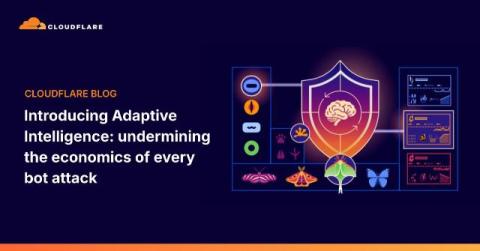
Introducing Adaptive Intelligence: Undermining the economics of every bot attack

Modern bot threats are increasingly driven by determined, sophisticated attackers. Often it is not even one person, but a group trading techniques with each other or a commercial service sold to anyone willing to pay. For many of them, getting past bot detection is a full-time job they genuinely enjoy. Block them and they get to work, finding a workaround. AI has simplified this further, making it even easier to set up complex configurations for attackers, lowering the overhead of an attack.

To self-host or not to self-host your password manager

For an individual, self-hosting a password manager is rarely realistic. Most people don't run servers, handle patching, or manage uptime, so a cloud vault ends up being the only practical choice. For an organization, self-hosting becomes a real decision, one your security and IT teams can make deliberately. And once you can choose, you also take on the risks and the responsibility that come with that choice.

The Curve Sets Your Attachment, Not Your Limit

The standard method for sizing a cyber program from a loss curve has two halves. Set the retention where the balance sheet can absorb the loss, and set the limit at the one-in-hundred-year figure. The first half is sound. The second is a convention borrowed from property catastrophe practice, and the curve does not derive it. ‍ The distinction matters because organizations treat both numbers as outputs of the same model, then defend a limit the model never produced.