Security | Threat Detection | Cyberattacks | DevSecOps | Compliance

What Is AI Penetration Testing? A Guide to Autonomous Security Testing

AI penetration testing is changing how organizations identify and exploit vulnerabilities. Instead of relying on traditional manual tests or basic automated scans, autonomous systems now simulate attacker behavior continuously and at scale. These systems use agentic AI to execute real-world exploits, reduce noise, and shift security left, all while keeping human experts focused on the creative flaws machines can’t yet catch.

Shifting from Vulnerability Management to Security Risk Prioritization with AI

The adage ‘an ounce of prevention is better than a pound of cure’ applies to AppSec vulnerability management. Traditionally, AppSec has focused on a reactive ‘curing flaws’ paradigm, identifying and fixing vulnerabilities after they have occurred. However, the never-ending escalation between threats and security leads to alert fatigue and security debt.

America's AI Action plan has arrived: 3 key takeaways that data security leaders need to know

On July 23rd, the White House released America’s AI Action Plan, a sweeping federal strategy to drive U.S. leadership in artificial intelligence. The message was loud and clear: AI is a national imperative. The plan calls for removing regulatory barriers, investing in infrastructure, and accelerating AI adoption across commercial and government sectors. For data security leaders, this signals a pivotal shift.

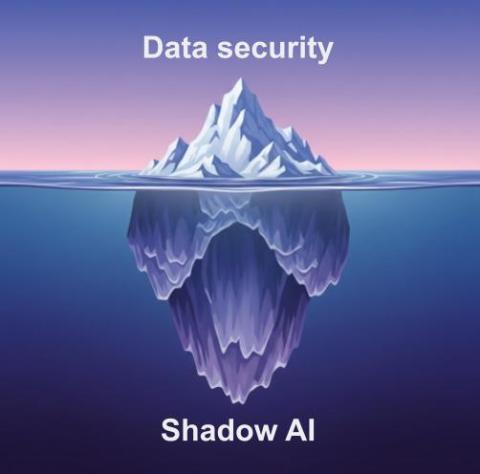
The Nightfall Approach: 5 Ways Our Shadow AI Coverage Differs from Generic DLP

Shadow AI refers to the unauthorized or unmonitored use of AI tools (like ChatGPT, Copilot, Claude, and Gemini) by employees in the workplace. It’s now one of the fastest-growing data exfiltration vectors. Employees are pasting source code, customer or patient data, contract terms, and even M&A info into gen AI tools, often without realizing the risk. And many legacy DLP tools are still catching up.

Riscosity Launches The DFPM Trust Center

For a AI software company like Riscosity, which helps organizations secure and govern data flows to third parties, compliance is not just a regulatory requirement—it is central to the value proposition. Recognizing this, Riscosity has launched a dedicated Trust Center at trust.riscosity.com, powered by industry leader Vanta, to streamline how it communicates its compliance posture with current and prospective customers.

What is Data Poisoning? Types, Impact, & Best Practices

Data poisoning is a type of cyberattack where malicious actors deliberately manipulate or corrupt datasets meant for training machine learning models, especially large language models (LLMs). Tampering parts of a raw data set with an incorrect, often duplicitous one can negatively impact the result in various ways. Fundamentally, it aims to alter how AI models learn information so that the output is flawed.

Top Financial Cyber Threats Facing Businesses in 2025

The world of business is facing a growing wave of cyber threats, especially when it comes to financial security. Cybercriminals are getting smarter, and their tactics are more sophisticated than ever. This isn't just a concern for big corporations; businesses of all sizes need to stay alert. A cyberattack could lead to major financial losses, damage to your reputation, or even legal headaches. In this article, we'll break down some of the top financial cyber threats businesses will likely face in 2025.

Stolen by the Scrapers: How to Protect and Profit from Your Content in the Age of AI

What is LLM Scraping? We’re entering a new phase of the Internet, one that is increasingly shaped by generative AI. These systems need data, and lots of it. To meet this hunger, they scrape the web, pulling in everything from news articles and academic journals to product listings, metadata, and user-generated content. This practice, known as large language model (LLM) scraping, has moved far beyond traditional bots indexing public sites.

AI and the 2025 SIEM landscape: A guide for SOC leaders

Security teams often find themselves having to put out the immediate fires in front of them, but this comes at the expense of implementing a more methodical risk reduction strategy. Attack surfaces are expanding, and new risks emerge with new tech. Modern security operations center (SOC) teams are drowning in alerts, stretched thin by talent shortages, and racing to stay ahead of increasingly sophisticated adversaries.