Security | Threat Detection | Cyberattacks | DevSecOps | Compliance

Leveraging AI to reduce cybersecurity costs and risks: A CISO's guide

In this article Chief Information Security Officers (CISOs) face a dual imperative in the digital landscape of today: safeguarding their organizations from an ever-evolving threat landscape while managing escalating security costs. Artificial Intelligence (AI) offers transformative potential in meeting these challenges by automating threat detection, streamlining compliance, and optimizing resource allocation.

How CISOs are using AI to automate risk assessments in 2025

In this article In 2025, the role of the Chief Information Security Officer (CISO) and compliance leadership has become even more critical in ensuring that risk assessments are not only comprehensive but also agile and adaptive. Artificial Intelligence (AI) has emerged as a transformative force in cybersecurity, enabling risk assessments to be automated, more accurate, and proactive.

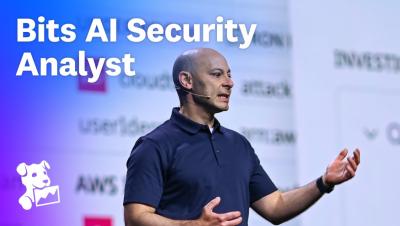
Bits AI Security Analyst: Automate Cloud SIEM investigations

Datadog's Bits AI Security Analyst transforms the way security teams handle investigations by autonomously triaging Datadog Cloud SIEM signals. Built natively in Datadog, it conducts in-depth investigations of potential threats and delivers clear, actionable recommendations. With context-rich guidance for mitigation, security teams can stay ahead of evolving threats with greater efficiency and precision.

AI is cybersecurity's biggest threat

It’s also its greatest defense The biggest threat in our rapidly evolving cybersecurity landscape is artificial intelligence (AI).1 It’s also our greatest defense. Cybersecurity is a high-stakes game where everything is on the line and decisions have to be made fast. For years, cybersecurity strategy has been about increasing visibility to make informed decisions from vast amounts of data.

Should You Still Get a Cybersecurity Degree in the Age of AI? Here's What to Know

Artificial intelligence is reshaping cybersecurity in rapid fashion. From automated threat detection to AI-assisted incident response, tools once handled manually by analysts are increasingly run by algorithms. That has many people wondering: is it still worth investing in a cybersecurity degree?

Seemplicity Launches AI-Driven Features to Eliminate Remediation Bottlenecks

Seemplicity unveiled a major product release packed with AI-powered capabilities to cut through noise, facilitate fixing teams, and reduce time to remediation. This latest release introduces AI Insights, Detailed Remediation Steps, and Smart Tagging and Scoping, three new capabilities that use AI to solve some of the most painful and time-consuming cybersecurity tasks.

Nucleus MCP Integration: Scaling Risk Reduction with AI-Driven Insights

Today, we’re excited to announce a preview of the Model Context Protocol (MCP) Server for Nucleus. This marks an important step towards AI-native workflows for vulnerability and exposure management. Model Context Protocol (MCP) is an emerging industry standard enabling seamless integration between enterprise applications and AI models. Backed by leading organizations like OpenAI, Microsoft, and Google, MCP servers are quickly becoming the foundation for AI-enablement across the enterprise.

Model Context Protocol (MCP) vs Model Control Plane (MoCoP): Why your AI security is screwed if you only have one

If you’re building AI systems with agents, plugins, and orchestration layers and you’re only thinking about how to route traffic, you’re halfway to being pwned. Everyone’s rushing to build a Model Context Protocol (MCP) — and that’s great. But almost no one’s talking about MoCoP — the Model Control Plane, which is just as important and arguably where the riskiest stuff happens. (Also, side note, who the hell keeps making these damn acronyms so confusing?