Security | Threat Detection | Cyberattacks | DevSecOps | Compliance

Browser Agent Security Risk - ChatGPT Atlas Corporate Adoption Trends

Last Tuesday, October 21st, OpenAI released ChatGPT Atlas, an AI-powered browser that allows users to interact with ChatGPT directly from any browser tab. Throughout last week, the Cyberhaven Labs team tracked its adoption in corporate environments and actively investigated its security vulnerabilities.

8 Best Cloud PAM Solutions in an AI World

AI is rewriting the rules of privileged access, but the rise of AI agents is creating a governance crisis. Threats like credential stuffing and privilege escalation are now accelerated by autonomous systems moving faster than humans can react. 82% of companies deploy autonomous AI agents, but 23% of IT teams admit those bots have already been tricked into revealing credentials—and fewer than half have guardrails in place. In modern infrastructure, machine identities now outnumber humans 80:1.

The League Assembled: Reflections from the AI Agent Security Summit

At the AI Agent Security Summit in San Francisco, some of the brightest minds in AI security and top industry leaders gathered to tackle one of the most challenging problems in tech nowadays - how do we secure super smart systems that change at runtime and are designed to think, adapt, and compete? As someone who spends every day turning AI security challenges into tangible solutions, I left the summit both inspired by the innovation on display and concerned by the magnitude of what’s still ahead.

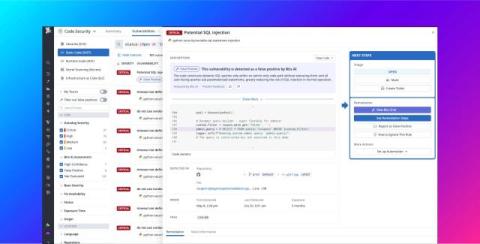
Using LLMs to filter out false positives from static code analysis

Static application security testing (SAST) is foundational to modern application and code security programs. Yet these tools inevitably produce false positives that require manual review. When scanners find vulnerabilities that are not genuine issues, they erode trust, slow down remediation, and make it harder for teams to understand which alerts require attention.

Making AI Less "Wednesday:" A Practical Guide to Using AI in Cyber Defense

Artificial intelligence has only been available for a relatively short period. Still, already many cyber defenders are as frightened as if Jenna Ortega’s Wednesday Addams had whipped her head around and set her dark, dangerous eyes on them. It’s not hard to see why. Machine learning, Gen AI, and Retrieval-Augmented Generation (RAG) are a few of more than 20 new acronyms flooding our industry, with more being added almost every day.

AI at Work: Speed, Risk, and Why Simplicity Wins

I’ve been spending a lot of time with teams and customers talking about AI. Not in terms of buzzwords or market predictions, but the real, in-the-trenches work of building software, serving customers, and securing identities and data. The mindset we’ve adopted around AI is simple: you can’t cut your way to great products or great customer experiences. AI isn’t about replacing people or chasing short-term efficiency gains.

The Evolving Role of AI Governance: Turning Risk into Responsibility

This piece is part of a monthly series by Carisa Brockman and Bindu Sundaresan exploring the evolving world of AI governance, trust, and responsibility. Each month, we look at how organizations can use artificial intelligence safely, thoughtfully, and with lasting impact.

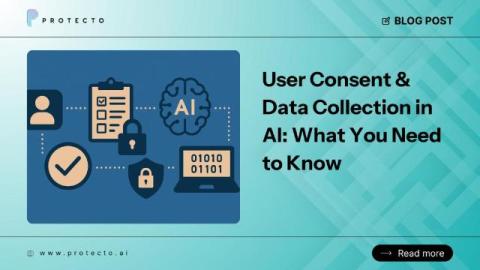
Understanding the Impact of AI on User Consent and Data Collection

AI convenience rides on a river of data: text, clicks, images, voices, locations, and metadata you didn’t know existed. The core question is not whether AI uses data but how it collects it, what it infers, and whether people truly agree to that. In other words, the impact of AI on user consent and data collection is not academic. It decides whether your product earns trust or burns it.

How AI-Powered Voice Technology (Using Murf AI) Can Enhance Cybersecurity Awareness & Training

No matter how advanced your firewalls or encryption tools are, the weakest link in cybersecurity often remains the human element. Phishing emails, fake voice calls, and social engineering attacks exploit human error more effectively than they exploit code vulnerabilities. To counter this, organizations invest heavily in cybersecurity awareness and training programs.