Security | Threat Detection | Cyberattacks | DevSecOps | Compliance

700Credit Breach: What Organizations Need to Know

700Credit, a US-based credit check and compliance provider, disclosed in late October that it had suffered a significant data breach affecting nearly 18,000 dealerships and more than 5.6 million consumers. According to the company’s disclosure and subsequent reporting, the exposed data includes names, addresses, dates of birth, and Social Security numbers.

CVE-2025-66675: Apache Struts DoS Vulnerability Leads to Disk Exhaustion

A newly disclosed denial-of-service vulnerability, CVE-2025-66675, affects a wide range of Apache Struts 2 versions and poses a serious availability risk for applications that handle file uploads. While the EPSS score is 0.05%, indicating a low probability of exploitation in the next 30 days, the vulnerability still represents a high availability risk for exposed and unpatched environments.

Modern Exposure Management Is About Outcomes, Not Alerts

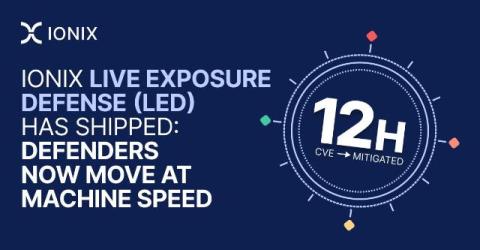
Modern exposure management has evolved beyond vulnerability scanning and alert volume into a discipline focused on measurable risk reduction. As the exposure management market matures, security leaders are adopting cyber exposure management platforms that unify signals across vulnerability, cloud, application, and attack surface tools to prioritize what truly matters.

CVE-2025-40602: SonicWall Releases Fix for SMA1000 Privilege Escalation Zero-Day Under Active Attack

On December 17, 2025, SonicWall released fixes for an actively exploited medium-severity zero-day vulnerability in the SonicWall SMA1000 Appliance Management Console (AMC), tracked as CVE-2025-40602. The vulnerability allows local threat actors to escalate privileges due to insufficient authorization in the SMA1000 AMC and does not affect SSL VPN functionality on SonicWall firewalls.

The Future Of Cybersecurity: How AI And Machine Learning Are Transforming Penetration Testing

In today's rapidly evolving digital landscape, the protection of sensitive information and critical infrastructure has become more paramount than ever. Traditional cybersecurity measures are increasingly being augmented with advanced technologies like Artificial Intelligence (AI) and Machine Learning (ML). These innovations are now transforming the realm of penetration testing, offering enhanced capabilities for identifying and mitigating vulnerabilities.

Mastering OWASP Detection: Enterprise Rules for AWS, Akamai, F5, and Cloudflare

Application Security, WAF, and OWASP form an interconnected defense strategy for web applications. OWASP (Open Web Application Security Project) provides the framework for identifying critical vulnerabilities through resources like the OWASP Top 10, while WAFs act as the protective layer that detects and blocks attacks targeting these vulnerabilities in real-time.

How to detect React2Shell attacks using network-based threat hunting

How do you find React2Shell vulnerabilities or detect React2Shell attacks in real environments? In this video, Corelight cloud security researcher David Burkett walks through how to threat hunt React2Shell by focusing on post-exploitation behavior at the network level. Instead of relying on exploit signatures, the approach uses application baselining and network traffic analysis to identify abnormal behavior.

Old AI Security vs Evo: Watch Agentic Security Replace Weeks of Manual Work

From intelligent chatbots to autonomous agents, innovation has never moved faster thanks to GenAI. But with the rate of velocity comes a massive new challenge: a class of complex, non-deterministic security risks that traditional cybersecurity methods are simply not equipped to handle. AI-native applications are already running in production. Across industries, teams are deploying copilots, RAG systems, autonomous agents, and AI-powered workflows faster than traditional security processes can keep up.

How Seal Security Helps You Meet FedRAMP Vulnerability Detection and Response Standard

Earlier this year, FedRAMP RFC-0012 signaled a coming shift in how cloud service providers (CSPs) working with the U.S. federal government are expected to handle vulnerabilities. It outlined plans to move FedRAMP away from simple CVSS-score thresholds and toward continuous, context-aware, exploitability-driven, and automation-first vulnerability management.

Fireside Chat: LevelBlue + Tenable Partnership - Unlimited Vulnerability Scanning at No Cost

Discover how LevelBlue and Tenable are transforming cybersecurity in this exclusive fireside chat featuring Michael Vaughn, Director of Product Management at LevelBlue, and Greg Goetz, VP of Global Strategic Partners at Tenable.