Security | Threat Detection | Cyberattacks | DevSecOps | Compliance

Update on React Server Components RCE Vulnerability (CVE-2025-55182 / CVE-2025-66478)

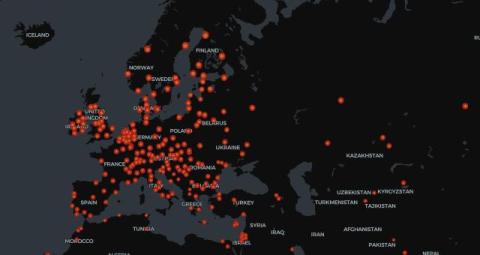
The attack landscape has been dynamic following the disclosure of the React Server Components RCE vulnerability. New information has emerged regarding the initial Proof-of-Concept exploit, as well as improved detection methods, exploitation mechanics observed in the wild, and rapidly growing attack activity. This update summarizes the changes and observations we have made across Wallarm customers.

Third-Party Vulnerability: What the Mixpanel Incident Means for Millions of ChatGPT and API Users

In late November 2025, developers and API users of ChatGPT and OpenAI’s platform received a note that felt personal: an alert about a data exposure linked not to OpenAI’s own servers but to a third-party analytics vendor. That vendor was Mixpanel.

Google Gemini 3 Pro Builds an App with ONE PROMPT...

Google announced Gemini 3 Pro, which they tout as their most intelligent model yet that's best for complex tasks and bringing creative concepts to life. We're going to put this model to the test and see how good it is at fulfilling our prompt with a production ready app and the security of the code it produces.

CVE-2025-66516: Critical XXE Vulnerability Exposes Apache Tika Deployments

A critical vulnerability, CVE-2025-66516 (CVSS 10.0), has been identified in Apache Tika, affecting how the framework processes PDF files containing XFA (XML Forms Architecture) data. The vulnerability resides in tika-core, which means any system using Tika’s default parsing behavior remains vulnerable even if the PDF parser module was previously patched. No special configuration or insecure application code is required; simply ingesting a malicious PDF is enough to trigger the exploit.

How to React(.js) to React2Shell and detecting behaviors to catch the Next(.js) big RCE

Critical vulnerabilities in React Server Components (CVE-2025-55182) and Next.js (CVE-2025-66478) enable unauthenticated remote code execution in default configurations. The flaw resides in the "Flight" protocol used for server-side rendering, making it a sought after target for adversaries looking to bypass standard controls. While the public discourse is currently cluttered with unreliable exploits, we need to ground our defense in verifiable network evidence.

Security Update: Critical RCE in React Server Components & Next.js (CVE-2025-55182)

A Critical Remote Code Execution (RCE) vulnerability, identified as CVE-2025-55182, has been discovered in Next.js applications utilizing React Server Components (RSC) and Server Actions. This vulnerability stems from insecure deserialization within the underlying “Flight” protocol used by React. Unauthenticated remote attackers can exploit this flaw to execute arbitrary code on the server, potentially leading to a complete compromise of the application and underlying system.

Automating SLAs in Risk-Based Vulnerability Management: Turning Deadlines into Results

Many organizations set remediation SLAs, but static severity-based timelines and manual tracking prevent them from meeting those deadlines in a way that meaningfully reduces risk. This article outlines how automated, risk-based SLAs connect timelines to real exploitability, exposure, and asset value, turning deadlines into reliable, measurable outcomes. Key takeaways from this article.

Critical vLLM Flaw Exposes the Soft Underbelly of AI Infrastructure

While the world worries about "jailbreaking" LLMs or preventing them from hallucinating, a critical new vulnerability has just reminded us of a fundamental truth: AI is just software, and software has bugs. A newly discovered critical flaw (CVE-2025-62164) in vLLM, one of the most popular libraries for serving large language models, allows attackers to achieve Remote Code Execution (RCE) or crash servers simply by sending a malicious API request. This isn't a failure of the AI model.