Security | Threat Detection | Cyberattacks | DevSecOps | Compliance

Snyk in 30: Open source security for Atlassian Bitbucket Cloud

In our latest Snyk in 30, Jason Lane (Director of Product Marketing) and I (Marco Morales, Partner Solutions Architect) showcased Snyk Open Source with a focus on our integration with Bitbucket Cloud. They covered why open source security is vital for modern app development, along with tips on taking a holistic approach to application security that goes beyond just shifting left.

Exploring the Spring Security authorization bypass (CVE-2022-31692)

In early November, a new authorization bypass vulnerability was found in Spring Security 5. Now, before we panic let’s look into this problem to see if you are vulnerable. Although the vulnerability is classified as high, there is only a specific set of use cases that are vulnerable. This means that not everyone is vulnerable, and I will show that in a second. Regardless, the advice is to upgrade to the newer version of the Spring Security.

What's in your build? Building Images in OpenShift with Artifactory and JFrog CLI

Red Hat OpenShift is an enterprise Kubernetes container platform. It lets you build Docker images and use them to deploy your applications on a cloud-like environment (even if it’s not really on the cloud, rather a simulated cloud environment). Images built in OpenShift can be easily pushed into JFrog Artifactory – JFrog’s leading universal repository manager.

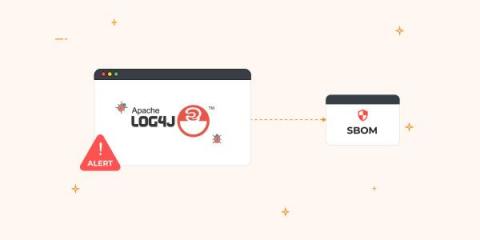
Log4j/Log4Shell One Year Later: Endemic Vulnerability Indeed

On December 9, 2021, Apache upended the cybersecurity industry by publishing a zero-day vulnerability (CVE-2021-44228) for its ubiquitous Log4j logging utility. Dubbed Log4Shell, the remote code execution flaw (CVSS score:10) allows an attacker to take control of a connected device and run malicious code, access sensitive data or alter its configuration. Because Logj4 is free and easy-to-use, it’s embedded (often deeply) in Java applications used by IT and OT platforms worldwide.

Stranger Danger: Your JavaScript Attack Surface Just Got Bigger

Building JavaScript applications today means that we take a step further from writing code. We use open-source dependencies, create a Dockerfile to deploy containers to the cloud, and orchestrate this infrastructure with Kubernetes. Welcome - you're a cloud native application developer! As developers, our responsibility has broadened, and more software means more software security concerns for us to address.

Instilling a Higher Level of Trust: Miles & Stockbridge

In this day and age securing data and ensuring clients are confident in their information being protected is imperative to build trust. So when integrating solutions how can you make sure that not only is data secure, but that you continue to increase bandwidth within your organization and mitigate future possible vulnerabilities?

Top takeaways from re:Invent 2022

Live conferences are finally back, and the 11th annual AWS re:Invent did not disappoint. After a virtual 2020 and an in-person reduced-sized edition in 2021, there were more than 52,000 (yes — 52,000!) smiling faces milling about this year’s conference in Las Vegas. As per usual, re:Invent was full of exciting product news and updates. Here are the major announcements that got our attention and some of the things Snyk was up to in Vegas.

CVE-2022-27518: Actively Exploited Remote Code Execution Vulnerability in Citrix ADC and Citrix Gateway

On December 13th, 2022, Citrix disclosed a critical remote code execution vulnerability (CVE-2022-27518) affecting several versions of Citrix ADC and Citrix Gateway. Citrix strongly advises affected customers to update to a supported version as soon as possible. While no public proof-of-concept exploit code is available for this vulnerability, Citrix has observed several instances of targeted exploitation.

CVE-2022-37958 - Critical Vulnerability in SPNEGO NEGOEX Could Lead to RCE on Windows platforms

As part of Microsoft’s September 2022 Security Update, Microsoft released security updates to remediate CVE-2022-37958–an information disclosure vulnerability in SPNEGO NEGOEX that impacted all Windows versions 7 or newer. On December 13, Microsoft reclassified the vulnerability as Critical severity after security researchers discovered that the vulnerability could allow threat actors to remotely execute code pre-authentication.