Security | Threat Detection | Cyberattacks | DevSecOps | Compliance

The Security Illusion: Why Your AI Security Tool Won't Save You (And Neither Will Your Traditional API Security)

The enterprise security world is having two separate conversations that desperately need to collide. On one side, application security (AppSec) teams are scrambling to secure APIs – the connective tissue of every modern application. On the other, a new wave of “AI security” vendors promise to protect your LLMs from prompt injection, data leakage, and hallucinations. Both groups are solving real problems. Both are missing half the picture.

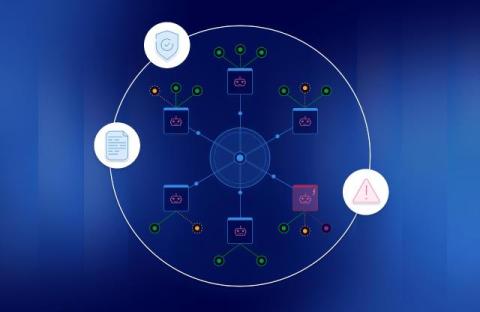
Three ways intelligent workflows enhance network security

Network security is operationally complex. It involves constant triage, approvals, and monitoring, spread across a range of tools, teams, and environments. Traditionally, this requires teams to do a significant amount of time-consuming, repetitive, and draining manual work, resulting in a longer MTTR and leaving many practitioners overwhelmed and burnt out. The problem isn’t in the tools they use – it’s in the work that happens between tools.

How to Choose the Best Tech Stack to Support Your Sales Team

If your sales team is to win new clients and upsell to your existing client base, it needs all the support it can get. The current financial climate means that businesses are under more pressure than ever before to perform efficiently and deliver results at a time when companies have less money to spend. For B2B enterprises, this creates additional challenges that extend way beyond the normal barriers to attracting new clients and closing sales. So, finding additional ways to support your sales team is a must.

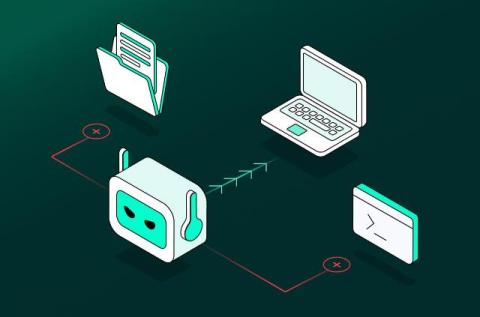
Agentic AI Security: Governing Shadow Agents on Endpoints

Most enterprise security programs were built around a simple assumption, not invalid assumption that data moves when a person decides to move it. AI agents have broken that model, and now act autonomously, reading files, calling APIs, executing code, and transferring data across systems without waiting for a human to approve each step. Many of these agents were never sanctioned by IT or security.

Stopping the Agentic Breach: How to Operationalize Your Defense Against Mythos-Speed Attacks

The industry has spent the past few weeks focused on Claude Mythos Preview and the rise of autonomous offensive AI. As outlined in Claude Mythos, Project Glasswing, and the Machine-Speed Security Race, this shift is not only about faster attacks. The same AI-driven acceleration that helps attackers discover weaknesses faster can also help defenders validate exposure sooner. For security operations teams, the challenge is turning that strategic shift into action.

Acronis recognized in Info-Tech report: Why unified, AI-powered platforms are the future

The cybersecurity landscape is changing quickly, and independent research confirms what many organizations are already experiencing: Fragmented tools are no longer enough. A new Info‑Tech report, “Prioritize unified, AI-powered platforms for cybersecurity, data protection, endpoint management and compliance,” explores why leading organizations are rapidly shifting to unified platforms.

The New Perimeter in Retail: Turning ZTNA Visibility into App Innovation

Currys shares its ongoing implementation of zero trust network access (ZTNA) to embed true zero trust principles across the retailer’s application landscape. Full configuration will conclude next year, but the initial rollout for applications has already yielded positive results. Netskope provides deep insight into user behavior, identifying when users attempt to access unknown or unsanctioned applications.

Protegrity + Presidio: Secure Sensitive Data in AI Workflows

See how Protegrity and Presidio help developers secure sensitive data in AI workflows. This demo shows how Protegrity AI Developer Edition helps teams discover, protect, mask, and redact sensitive data before it reaches AI models, applications, or analytics pipelines. You’ll learn how developers can.