Security | Threat Detection | Cyberattacks | DevSecOps | Compliance

IoT Security Framework: Building Comprehensive Device Protection

The exponential growth of Internet of Things (IoT) deployments across enterprise environments has fundamentally transformed how organizations approach cybersecurity. The rapid increase in IoT connections has significantly expanded the attack surface, making it more challenging to secure networks. Enterprises face unique challenges and require robust IoT security frameworks to manage the scale and complexity of their deployments.

From Python to Prompts: Becoming an AI-First Developer

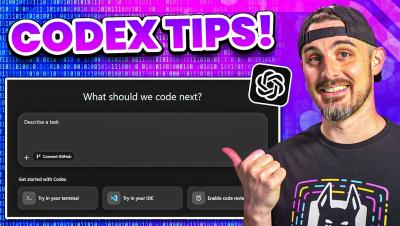
As part of the DevSecNext AI series, Jit hosted Sahar Carmel—Principal AI Engineer at Flare—for an inside look into what it really takes to become an “AI-first” developer. With nearly a decade of experience in AI and machine learning, Sahar has been hands-on with copilots and agents long before they were mainstream. In this session, he walks through his radical shift in workflow: from writing code line-by-line to orchestrating prompts, tokens, and memory banks.

Hi My Name Is...the Not So Shady Side of Long-Term Memory in AI

In our last post, we explored how short-term memory enables agentic AI to hold a conversation that doesn’t reset after every message. That form of memory is all about flow—preserving context, user intent, and logic within a single session, even as interactions stretch across multiple turns. The longer the session, the more memory is required to maintain continuity. But not all memory needs to be verbose. Long-term memory serves a different purpose: persistence across sessions.

Smart City Security: Protecting Critical Infrastructure with IoT

The transformation of urban environments through Internet of Things (IoT) technology has created unprecedented opportunities for improving city services, enhancing quality of life, and optimizing resource utilization. This process of digital transformation modernizes and integrates city infrastructures, improving efficiency but also introducing new cybersecurity challenges.

The Blind Spots of Multi-Agent Systems: Why AI Collaboration Needs Caution

Multi-agent systems (MAS) are reshaping industries from IT services to innovative city governance by enabling autonomous AI agents to collaborate, compete, and solve complex problems. This powerful transformation comes with a cost. As multi-agent systems grow, their risks also increase, opening the door to adversarial manipulation, emergent vulnerabilities, and distributed attack surfaces.