Security | Threat Detection | Cyberattacks | DevSecOps | Compliance

The Latest Cybersecurity News & Insights From Around The World



All about Internet Measurement, Resilience, and Transparency
In this episode, host João Tomé talks with Marwan Fayed, Principal Scientist and Research Lead at Cloudflare, about the science behind understanding and improving the Internet.
Elevating public sector cyber defense with AI-powered threat hunting
Public sector organizations face sophisticated, persistent threats — 38% of public sector organizations say their cyber resilience is insufficient compared to 10% of medium to large private businesses. With sensitive data and critical infrastructure at stake, agencies need tools that enable proactive detection and rapid investigation, all while keeping data inside a secure boundary.
Entropy vs. Encryption: Which Tokenization is Better?
The rapid scale of AI development and deployment has introduced a number of unprecedented privacy and compliance challenges for enterprises. IT and compliance teams are looking for solutions that address these concerns without affecting AI adoption. Tokenization has for long been the solution for protecting sensitive data. However, to implement it correctly, it is critical to understand which type fits best – both protect PII but differently.
The Back Room Problem: Why Most Organisations Lack AI Data Visibility
AI Risk & Governance Sam Soares CRO 31 October 2025 5 min read Share.
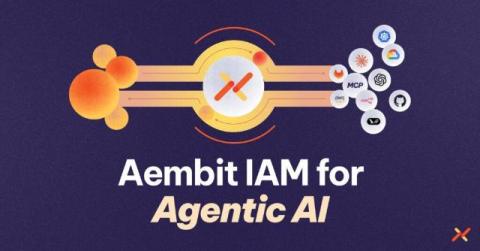
Aembit Introduces Identity and Access Management for Agentic AI
The new capabilities, anchored by Blended Identity and the MCP Identity Gateway, give enterprises a secure and auditable way to manage how AI agents identify themselves and access sensitive systems.

Installing Chrome Dev Tools MCP in Goose
Installing Chrome Dev Tools MCP in Goose.

AI Unlocks Ransomware And Deepfake Espionage
Attackers use AI to craft phishing, automate ransomware, and slip deepfakes into job interviews—breaching systems without ever touching a keyboard.
When APIs Become Attack Paths: What the Q3 2025 ThreatStats Report Tells Us
Wallarm’s latest Q3 2025 API ThreatStats report reveals that API vulnerabilities, exploits, and breaches are not just increasing; they’re evolving. Malicious actors are shifting from code-level weaknesses to business logic flaws, from web apps to partner integrations, and from REST to AI-powered APIs. Here’s what stood out this quarter, and what security leaders should do about it.

CVSS 4.0 and its Evolving Role in Vulnerability Management
Adam Dudley, Nucleus VP of Strategy and Alliances, provides some background on the Common Vulnerability Scoring System (CVSS) version 4.0 in this Nucleus conversation. He discusses the improvements made in the new version, the evolving role of CVSS in vulnerability management, the limitations practitioners face, and the future of scoring systems in the context of emerging technologies like AI. The conversation emphasizes the importance of context and quality inputs in effectively utilizing CVSS for risk assessment.