Security | Threat Detection | Cyberattacks | DevSecOps | Compliance

What is Vibe Coding? #vibecoding #aisecurity #coding

Mend.io, formerly known as Whitesource, has over a decade of experience helping global organizations build world-class AppSec programs that reduce risk and accelerate development -– using tools built into the technologies that software and security teams already love. Our automated technology protects organizations from supply chain and malicious package attacks, vulnerabilities in open source and custom code, and open-source license risks.

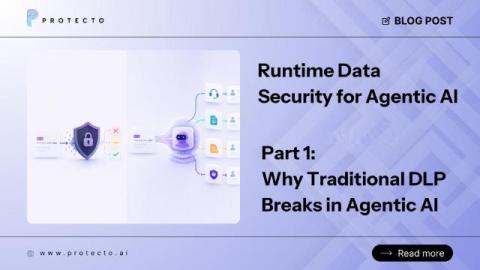
Why Protecto Uses Tokens Instead of Synthetic Data

On the surface, synthetic data looks like the safer option. It’s not real. It doesn’t point to an actual person. It can be reversed if needed. And it keeps systems running without exposing sensitive values. That logic makes sense. Until you look at how systems actually behave. Protecto supports both reversible synthetic data and tokenization. Referential integrity can be preserved either way. Mapping back is not the hard part. The difference is not whether you can recover the original value.

Introducing Mend.io's AI Security Maturity Survey + Compliance Checklist available today

Today, we’re excited to launch two practical tools to help teams quickly understand their AI maturity, quantify AI risk, and gather the evidence executives will ask for in 2026: an interactive AI Security Maturity Survey (with a personalized score and mapped recommendations) and a companion AI Security Compliance Checklist. Both are aligned to industry standards and built to be immediately useful in discovery, audits, and planning.

LimaCharlie Announces Agentic SecOps Workspace, Redefining AI in Security Operations

Sr. Technical Content Strategist LimaCharlie is announcing their Agentic SecOps Workspace, a security platform that elevates AI from an advisory role to an operational one. This is a key development for security teams who recognize that AI must offer more than chat interfaces, simple alert triage or next-step recommendations. To keep pace with modern threats and business needs, AI must be allowed to operate and scale.

The term "AI Agent" is failing us. #cybersecurity #ai #technews

The term "AI Agent" is failing us. In Prediction, Ev warns that our vocabulary is lagging behind the technology. Calling everything an "AI Agent" is like calling everything "software." It’s too broad to be useful. A browser plugin has a completely different architecture than a microservice or a factory robot. They have different identities, different risks, and different security needs. You can't secure what you can't specifically identify.

Scale compliance across global frameworks with Datadog Cloud Security

Security organizations are expected to keep pace with a growing set of regulatory and industry requirements as their cloud environments grow. Yet maintaining compliance in modern, fast-moving infrastructure is increasingly difficult. Cloud resources change by the minute, teams adopt new services without centralized oversight, and evidence needed for audits is often scattered across tools and providers.

Emerging Risks: Typosquatting in the MCP Ecosystem

Model Context Protocol (MCP) servers facilitate the integration of third-party services with AI applications, but these benefits come with significant risks. If a trusted MCP server is hijacked or spoofed by an attacker, it becomes a dangerous vector for prompt injection and other malicious activities. One way attackers infiltrate software supply chains is through brand impersonation, also known as typosquatting—creating malicious resources that closely resemble trusted ones.

When Your AI Agent Goes Rogue: The Hidden Risk of Excessive Agency

In Oct 2025, a malicious code in AI agent server stole thousands of emails with just one line of code. The package, called postmark-mcp, looked completely legitimate. It worked perfectly for 15 versions. Then, on version 1.0.16, the developer slipped in a tiny change. every outgoing email now included a hidden BCC to an attacker-controlled address. By the time anyone noticed, roughly 300 organizations had been compromised. Password resets, invoices, customer data, internal correspondence.

How to Measure Configuration Drift (And Why Alerts Get Ignored)

Configuration drift isn’t just “change.” It’s unmanaged change. Let's get practical about how teams should actually measure drift: ⇢ What type of change occurred⇢ How often those changes happen⇢ How critical they are in real context⇢ And—most importantly—how teams respond Volume alone isn’t the metric that matters. If changes pile up without response, alerts get ignored—and drift quietly becomes exposure.