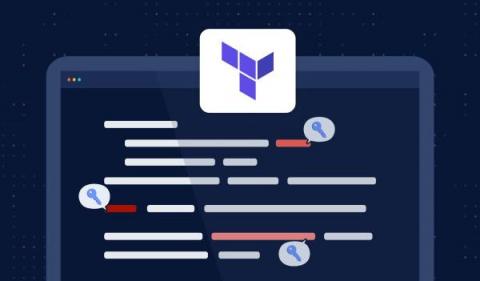
How to Handle Secrets in Terraform
DevOps engineers must handle secrets with care. In this series, we summarize best practices for leveraging secrets with your everyday tools.


DevOps engineers must handle secrets with care. In this series, we summarize best practices for leveraging secrets with your everyday tools.
The National Institute of Standards and Technology recommends using longer passphrases instead of passwords for authentication purposes. Passphrases improve an organization’s security posture and reduce the risk of data breaches: they are more complex, easier to remember, and more resistant to cyber-attacks.
Customers of software vendors with multiple global data centers can more easily comply with regional data protection and privacy requirements by hosting their data in their preferred geographic region.
Firewalls have had a major influence on modern security techniques and have become the basis of corporate network security. This technology acts as the first line of defense and is a must for any company with a network infrastructure.
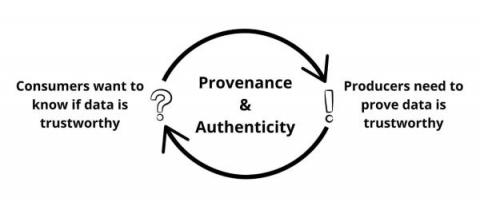
Last week, the godfather of AI, Geoffrey Hinton smashed the glass and activated the big red AI alarm button warning all of us about creating a world where we won’t “be able to know what is true anymore”. What’s happening now with everything AI makes all the other tech revolutions of the past 40 plus years seem almost trivial.
Healthcare cyberattacks are increasing in “frequency, severity and sophistication,” said Nitin Natarajan, U.S. Cybersecurity and Infrastructure Security Agency (CISA) deputy director, in his recent HIMSS23 Healthcare Cybersecurity Forum keynote. Attacks on hospitals have surged by 86% since 2021, with the average healthcare organization experiencing two or more ransomware attacks in the past year. “And this is going to continue to increase,” Natarajan warned.
AppSec teams often struggle to either validate or scale their security policies, like enforcing security headers or removing risky technologies. This job is easier said than done, and teams are feeling the pinch. To address these challenges, we launched Attack Surface Custom Policies – a powerful feature built directly into Surface Monitoring that makes it possible to set, enforce, and scale customizable security policies so you can focus on the issues that matter most.
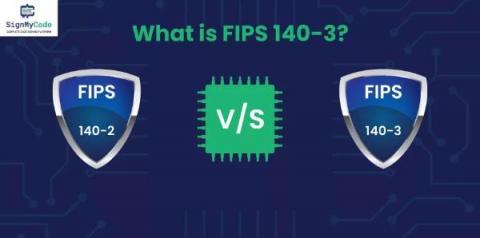
The Federal Information Processing Standard (FIPS) 140-3, is a collection of standards released by the United States government to examine cryptography modules. It explains how to design, develop, and run a cryptography module. The National Institute of Standards and Technology (NIST) and Communications Security Establishment (CSE) created FIPS 140-3 to safeguard critical, unclassified information.