Security | Threat Detection | Cyberattacks | DevSecOps | Compliance

Protecting Your Freight Operations: Essential Cybersecurity Guide for Logistics Networks

Freight forwarders face an escalating cyber threat landscape that can destroy operations within months. According to IBM research, a single data breach in the transport sector costs an average of $4.18 million. For small and medium freight forwarders, the consequences prove devastating: 60% of small companies go out of business within six months of a cyberattack.

3 Truths About the Financial Sector's Digital Supply Chain Uncovered by Bitsight TRACE

When it comes to managing cyber risk, the financial sector is squarely at the top of the food chain. It’s simple economics (and the plot of many movies): financial institutions have the money, and cybercriminals are always looking for ways to take it. As a result, institutions have invested heavily in strengthening their internal systems and cybersecurity controls. Those investments have paid off.

Secure by Design, Secure by Default, Secure by Demand: The Signs of a Secure Software Supply Chain

Welcome to Data Security Decoded. Join host Caleb Tolin in conversation with Lauren Zabierek, Senior Vice President for the Future of Digital Security at the Institute for Security and Technology. A former CISA leader and long-time national security professional, Lauren unpacks the principles of Secure by Design, Secure by Default, and Secure by Demand and how these frameworks are reshaping the software supply chain.

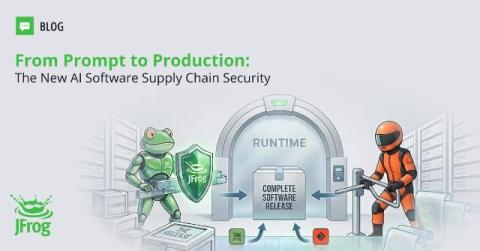
JFrog & GitHub: Unifying the Software Supply Chain, One Step at a Time... and Our 2025 GitHub Technology Partner Award

Organizations increasingly demand platforms that not only accelerate software delivery but also provide trust, security, and traceability. At JFrog, the software supply chain is managed and secured by default, from commit to runtime. That’s why our deep integration with GitHub is central to how we help teams manage, monitor, and secure every step of software delivery. In this post, we’ll explore.

How Cloudflare's client-side security made the npm supply chain attack a non-event

In early September 2025, attackers used a phishing email to compromise one or more trusted maintainer accounts on npm. They used this to publish malicious releases of 18 widely used npm packages (for example chalk, debug, ansi-styles) that account for more than 2 billion downloads per week. Websites and applications that used these compromised packages were vulnerable to hackers stealing crypto assets (“crypto stealing” or “wallet draining”) from end users.

A Framework for Cloud Resilience: Practical Steps to Harden Your Software Supply Chain

This user quote, captured on Reddit, underscores the real-world consequence of cloud outages: when it happens, the world stops. As your organization scales, you often make strategic decisions to centralize your workloads, whether it’s meeting strict regulatory requirements that demand data locality, or minimizing latency for compute-heavy applications. The true challenge isn’t deciding which cloud vendor to go with; it’s mitigating the risk of a single point of failure.

From Path Traversal to Supply Chain Compromise: Breaking MCP Server Hosting

We found a path traversal vulnerability in Smithery.ai that compromised over 3,000 MCP servers and exposed thousands of API keys. Here's how a single Docker build bug nearly triggered one of the largest AI supply chain attacks to date.

Supply chain resilience: Ultimate guide to global risk management

With the shifting economic landscapes and unforeseen disruptions, global supply chains are being tested like never before. Businesses across various industries are recognizing that robust risk management isn’t just an operational requirement; it’s a strategic imperative. From sudden geopolitical changes to natural disasters and digital threats, the challenges facing supply chains demand proactive measures and flexible strategies.

JFrog AppTrust: A Technical Deep Dive into Building a Trusted Software Supply Chain

Software supply chains have grown more complex as software delivery accelerates across more teams, technologies and environments. While the pace of releases continues to increase, the ability to manage these releases has not accelerated correspondingly. Developers and development operations are now firmly in the spotlight, as new regulations demand clear, auditable proof that every stage of the software lifecycle, from coding to production is secure and compliant.

Threat-Informed TPRM: A New Standard for Supply Chain Security

Third-party attacks have emerged as one of the most critical threats in the modern cyber landscape. Adversaries increasingly exploit vulnerabilities within external vendors, suppliers, contractors, and service providers to gain indirect access to target organizations, often with severe consequences. These breaches can lead to significant data loss, operational disruption, regulatory penalties, and reputational damage.