Security | Threat Detection | Cyberattacks | DevSecOps | Compliance

How to Encrypt S3 Buckets Automatically with Torq

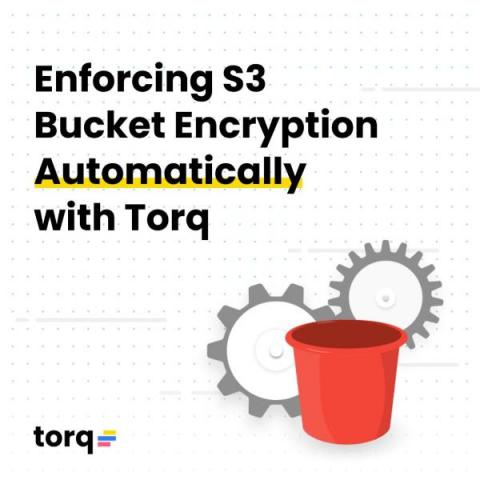
S3 buckets without encryption can leave sensitive data exposed and at risk. As a best practice and to meet a number of industry and governmental regulations, it’s important to ensure that S3 server side bucket encryption has been properly applied at all times. To do this, many security teams rely on their Cloud Posture Security Management (CSPM) platform and/or AWS GuardDuty to monitor their AWS resources and provide alerts when an S3 bucket is found unencrypted.

What is Encryption? Difference between symmetric and asymmetric encryption

Encryption is the act of encoding information to make it unreadable for anyone other than those who are authorized to read it. There are two types of encryption: symmetric and asymmetric. Symmetric encryption uses the same key to encode and decode data, while asymmetric encryption uses different keys - one public key that can be shared with everyone, and one private key only known by the owner. In this video, we discuss the meaning of encryption and what it is used for. We also go over what asymmetric and symmetric encryption are.

Quantum threat to cryptography and how to overcome this

We are familiar with quantum computing; know that it enables devices to do computations at an utterly inconceivable rate. It facilitates incredible advancements in technology. Ironically, quantum systems can make modern impenetrable cryptography hackable within seconds. Currently, quantum computers pose a high threat to the cryptography that underlies the safety of crucial networks.

RDP Security Risks and Encryption Explained

To get a better understanding of how RDP works, think of a remote-controlled toy car. The user presses buttons on the controller and makes the car move forward or backwards. He can do all that and control the car without actually contacting it; the same is the case while using RDP. This article shall help you become aware of RDP security encompassing threats, vulnerabilities and encryption practices.

What is PGP encryption? How it works and why it's still reliable.

PGP encryption (Pretty Good Encryption) is a data encryption program used to authenticate and provide cryptographic privacy for data transfers. PGP encryption is used to secure all forms of data and digital transmissions. It's capable of encrypting and decrypting: PGP is a quick-to-implement and cost-effective encryption method.

Differences between hashing and encryption and salting explained with examples

Hashing is a one-way function that outputs a fixed-length string, where it’s impossible to decipher back into the original input. Encryption is a reversible process used to scramble data so that it can’t be read. So, if you’re looking for a way to keep your passwords safe and secure, look no further than hashing! But there is a slight catch here that relates to the term salting.