Security | Threat Detection | Cyberattacks | DevSecOps | Compliance

What is Encryption? How It Works and Its Benefits

Encryption technology is vital to securely sharing information over the internet. An estimated 1.145 trillion MB of data is created every day, and encryption prevents sensitive information from being intercepted, read or altered by the wrong recipients. Not sure what encryption is or how it works? Keep reading to learn more about data encryption, its purpose and benefits.

Symmetric Encryption vs. Asymmetric Encryption? How it Works and Why it's Used

Cybersecurity is a top priority for businesses, governments, and individuals alike. With the rise of cybercrime in recent years, it’s more important than ever to ensure that sensitive data is kept safe and secure. That’s where encryption comes in. Encryption is the process of encoding data so that only authorized users can access it. There are two main types of encryption: symmetric and asymmetric encryption.

Cryptography 101: Key Principles, Major Types, Use Cases & Algorithms

Cryptography is fundamental to many information security and privacy mechanisms. Today, a variety of cryptographic algorithms are used in many different applications. This article explains cryptography: how it works, key principles or operations of cryptography, types of cryptography, use cases and more! (This article was written by Shanika Wickramasinghe.

How End-to-End Encryption in Messaging Apps Benefits Your Business

Encryption means converting data (in the form of plain text) into a code that is unreadable by humans to prevent unauthorized access. There are many types of encryption, and they include encryption in transit, encryption at rest, and end-to-end encryption. Among them, end-to-end encryption is probably the best for communication services.

What is a Cipher Suite?

Today's term is cipher suite, a combination of algorithms that are used in cryptography to secure communication between servers and clients. A cipher suite includes a series of ciphers that fulfill various purposes, such as key generation, authorization, and integrity checksumming. These ciphers ensure the confidentiality and authenticity of the information being transmitted by encrypting and decrypting it. The client and web server negotiate and agree on the specific cipher suite to be used for their communication.

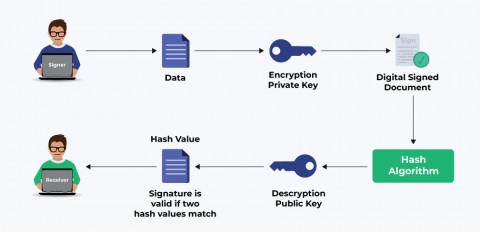
What are the Differences Between Encryption and Signing? Why Should You Use Digital Signatures?

While we have all used digital security certificates like SSL/TLS, code signing certificates, or others, many don’t know the security technology behind them. Stringent security standards ensure that the cyber threats looming around us never get to our digital systems. Due to such threats, there’s a constant advancement happening in data security technology to protect sensitive information. Encryption and Signing are two methods used widely for data security.

Data Encryption Methods & Types: Beginner's Guide To Encryption

Data encryption is one of the many ways organizations can protect their data. Encryption turns plaintext (readable data) into ciphertext (randomized data), which requires the use of a unique cryptographic key for interpretation. In other words, encryption is a security measure used to scramble data so that it can only be read by authorized personnel.

3072-bit Key Length: Additional Strength to Code Signing Certificate

As data is becoming a critical asset and data breach incidents are increasing, the software is becoming a primary factor for both. And for securing it, Code Signing Certificate is a primary component software publishers use. Developers have recently been utilizing certificates with a 2048-bit key length. But, in 2021, a new policy was enacted, directing CAs to issue Code Signing Certificates with a 3072-Bit Key Length. The primary aim of defining such a standard was to strengthen security.