In this post we will explore Linux Crypto API for user applications and try to understand its pros and cons. The Linux Kernel Crypto API was introduced in October 2002. It was initially designed to satisfy internal needs, mostly for IPsec. However, in addition to the kernel itself, user space applications can benefit from it.
Today, Fireblocks is launching our new Fireblocks Compliance Solutions Suite to streamline and simplify how our customers meet digital asset regulatory requirements, and stay ahead of industry threats. The new suite enables Fireblocks customers to easily integrate transaction monitoring, wallet screening, and Travel Rule compliance into their existing transaction and compliance workflows and approvals.
The content of this post is solely the responsibility of the author. AT&T does not adopt or endorse any of the views, positions, or information provided by the author in this article. The future of finance is being reshaped by blockchain technology. This revolutionary technology has the potential to revolutionize how people and businesses interact with money, from offering greater transparency and better security to faster speeds and lower costs.
Fireblocks has launched support for Avalanche’s subnet, Spruce, an EVM-based testnet built for institutional blockchain deployments. Spruce is intended to be used by buy and sell-side institutions looking to experiment with blockchain infrastructure in a low-risk environment. Institutional participants have already begun onboarding onto the testnet, and will be using it to evaluate the advantages of executing and settling trades on-chain for different assets and applications.
Operating a Web3 business typically requires the use of crypto in either development, operations, or finance. However, some new entrants into the Web3 space may not want to deal with the accounting, regulatory, or custody issues associated with crypto – or with its volatility. So, how can Web3 businesses efficiently operate while minimizing their exposure to crypto?
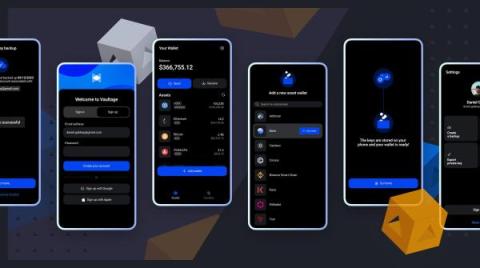
Web2 users are accustomed to an easy sign-up and onboarding process for almost any application or service they engage with. In most cases, they simply use their email or phone number to create a username and password. However, when engaging with Web3 applications, users will need to either connect an existing wallet to the application or create a new wallet.