Security | Threat Detection | Cyberattacks | DevSecOps | Compliance

External IP Addresses to Include in Pentest: Best Practices for Security Testing

Carrying out a pentest correctly is important for finding and fixing security holes in a company. Including useful external IP addresses is an important part of pentesting. Hackers can get into a company's network and possibly take advantage of vulnerabilities by using these addresses as entry points. Companies can make sure their pentests are thorough and useful by carefully choosing and ranking which external IP addresses to test.

A Secure VPC as the Main Pillar of Cloud Security

In 2019, the Capital One breach led to the exposure of 100 million customers’ personal data due to a misconfigured WAF. The incident ultimately cost Capital One over $270 million in fines and compensation, demonstrating the serious risks inherent in cloud security and highlighting the urgent need for robust security measures. As cloud adoption accelerates, public cloud services spend is expected to jump 20.4% versus 2023, reaching $675.4 billion this year.

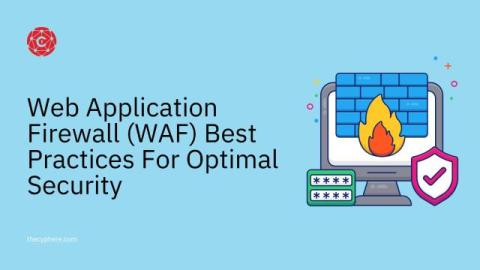
The Need for Next-Generation Web Application Firewalls (WAFs) in Modern Threat Landscape

In today’s ever-evolving threat landscape, organizations face numerous security challenges that necessitate a shift from traditional web application firewalls (WAFs) to next-generation solutions. This article aims to highlight the failures of traditional WAFs, contrast them with the capabilities of next-gen WAFs, and emphasize the crucial need for API security in the current digital ecosystem.

Convert Mbps to Gbps: The Ultimate Guide to Data Rate Conversions

A megabit is denoted as Mib and is also referred to in terms of mbps, meaning a megabyte. When dealing with computer networks, understanding the data transfer rating or speed becomes important in practice, such as megs Mbps. Most commonly, one megabit represents a million bits, which is the smallest unit in computing that is able to store data In most cases, Mbps is defined when the speed of the connection to the Internet is measured. The Mbps can also be described in more detail as the indicator which tells us what is the level of data transfer for every second.

CrowdStrike + Fortinet: Unifying AI-Native Endpoint and Next-Gen Firewall Protection

In today’s fast-evolving cybersecurity landscape, organizations face an increasing barrage of sophisticated threats targeting endpoints, networks and every layer in between. CrowdStrike and Fortinet have formed a powerful partnership to deliver industry-leading protection from endpoint to firewall.

What is a Reverse Proxy, How Does it Work, and What are its Benefits?

A reverse proxy is a server that sits between the client and the origin server. It accepts requests from clients and forwards them to the appropriate server. It also receives responses from the server and sends them back to the client. A reverse proxy is an essential component of web application infrastructure, providing a layer of abstraction between clients and origin servers to help optimize traffic routing and improve performance and security.

Are You in Sync with Your Security Vendor?

In today’s rapidly evolving threat landscape, the relationship between a security vendor and its customer is more critical than ever. As information security professionals, the pressure to ensure robust security postures is constant. Yet, the tools and services relied upon often fall short due to a fundamental disconnect between vendors and their customers.

Policy as code in Kubernetes: security with seccomp and network policies

The dynamic world of Kubernetes and cloud security is constantly evolving. As we explore this complicated ecosystem, it’s crucial to understand the role of policy as code (PaC) and its impact on operations and security teams. Emerging from the broader paradigm of infrastructure as code (IaC), PaC represents a significant shift in how we manage and secure cloud-native environments.

Long-tail latency: The silent killer of network performance and how DDI Central eliminates it

When it comes to network performance, not all delays are created equal. While average latency gets most of the attention, long-tail latency is often the unseen culprit that silently undermines your network’s efficiency. Before taking a closer look at how a DDI solution helps reduce long-tail latencies and improve efficiency while delivering a seamless network experience, let’s start by learning more about latency.

Scalable Security & DevSecOps with Calico's Network Policy Model for Microsegmentation

In today’s fast-paced cloud-native world, scaling security alongside rapid development cycles presents significant challenges. As organizations increasingly adopt Kubernetes, ensuring consistent, fine-grained security across dynamic workloads becomes essential. Calico’s policy model for microsegmentation offers a scalable solution that integrates seamlessly into DevSecOps workflows, enabling teams to implement robust security controls without compromising agility.