Security | Threat Detection | Cyberattacks | DevSecOps | Compliance

How Calico Network Threat Detection Works

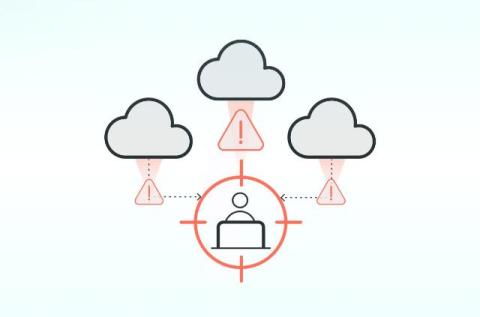
In today’s cloud-native environments, network security is more complex than ever, with Kubernetes and containerized workloads introducing unique challenges. Traditional tools struggle to monitor and secure these dynamic, interconnected systems, leaving organizations vulnerable to advanced threats, such as lateral movement, zero-day exploits, ransomware, data exfiltration, and more.

Using IP Lookup for Cybersecurity Monitoring

Wherever you live, people can find you using either a street address or a set of latitude and longitude numbers. In the digital world, your website’s domain name or URL is the street address while the IP address is the latitude and longitude. For example, it would be cumbersome to tell people that you live at 35°05′17″N 109°48′23″W, but easy to say a number and street name. IP address data is useful for both protective and detective cybersecurity functions.

Improving Enterprise Level Visibility Using NDR: Your Complete Guide to Network Security

There was an average major security breach in 95% of organizations in 2023, at an average price of $4.45 million. In today’s rapidly evolving threat landscape, complete visibility of the network is required for businesses. As enterprises increase their digital footprints, monitoring and securing complex network infrastructures become more and more important. With the emergence of sophisticated hackers and regular ransom attacks, organizations must implement the strongest network security solutions.

Cato CTRL Threat Brief: CVE-2024-49112 and CVE-2024-49113 - Windows LDAP Vulnerabilities ("LDAPBleed" and "LDAPNightmare")

In a world where dozens of CVEs are released every day, there are vulnerabilities, and there are vulnerabilities. The latest Microsoft Windows LDAP (Lightweight Directory Access Protocol) vulnerabilities, which were coined not once but twice (“LDAPBleed” and “LDAPNightmare”), clearly belong to the shortlist of new and dangerous CVEs.

Palo Alto Networks Releases Critical Update for PAN-OS DoS Vulnerability

Cybersecurity authorities continuously grapple with the challenges posed by sophisticated cyberattacks. Palo Alto Networks has lately preached a critical denial-of-service (DoS) vulnerability in its PAN-OS software. Tracked as CVE-2024-3393, this critical vulnerability (CVSS score: 8.7) poses serious risks to enterprises relying on PAN-OS and Prisma Access for their cybersecurity infrastructure.

Breaking Through Barriers: Cato's Solution for Seamless China Connectivity

Enterprises expanding their operations often face the challenge of also ensuring seamless and secure connectivity in China, a critical market with unique regulatory and network challenges. Businesses entering this vast market often face three primary obstacles: These challenges can hinder productivity, stall digital transformation, and overwhelm IT teams. The question is clear: how can enterprises achieve secure, seamless, and compliant connectivity in this complex digital environment?

What's Next? 2025 Cybersecurity Predictions & 2024 Lessons

What were the biggest cyber threats of 2024, and what do they mean for cybersecurity in 2025? Join Daniel dos Santos, Sr. Director and Head of Forescout Research, and Rik Ferguson, VP of Security Intelligence, as they break down the most impactful lessons from the past year and share expert insights into what’s coming next.
Sponsored Post

Capturing Network Traffic anytime

Capturing network traffic is usually done either for security reasons or to troubleshoot networking issues. But by the time you initiate a network capture (either manually or automatically) it’s often too late already – the train has already left the station. Point in case: Say your SIEM (obviously EventSentry) detects abnormal or suspicious behavior in a log and a network capture is initiated.