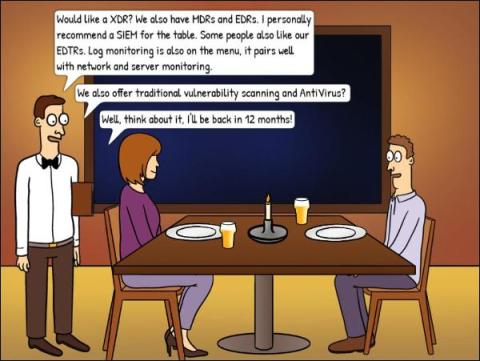
If you want to keep your business network online, investing in 24/7 security monitoring is a great option. Here's what you need to know.
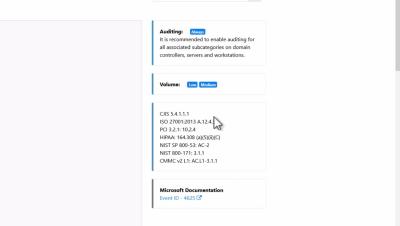
In this post, we will dive into how to configure file access auditing on a Windows file server and explore the challenges with interpreting critical access events.
Just like shopping on Black Friday, AWS re:Invent has become a post-Thanksgiving tradition for some of us at Datadog. We were excited to join tens of thousands of fellow AWS users and partners for this annual gathering that features new product announcements, technical sessions, networking, and fun. This year, we saw three themes emerge from the conference announcements and sessions.
Many people remember where they were during historic events. Whether it is a personal, or a public occurrence, it’s just human nature to remember these significant moments. Every profession also has its share of memorable events. In medicine, those who were in the profession will remember where they were when they heard about the first heart transplant or the discovery of a cure for a particular disease. In cybersecurity, there are similar events that stick in the mind.
Over the last few years, rapid digital payment adoption and technology development have played an essential role in making international money transfers cheaper, faster, and easier than they were decades ago. The volume of cross-border transactions is now expected to grow to $39.9 trillion by 2026, as these payments are essential in the interconnected economy.
File Integrity Monitoring, aka as FIM, is a must-have feature for anyone in charge of security. With FIM, one can detect when a critical file, such as a file that belongs to the Operating System, or a key configuration file, is changed. In most cases, configuring FIM is straightforward: If the file changes then generate an alert.
While the internet grows, so does the online presence of businesses of every scale. Although this allows for seamless business operations, you have to also consider the risks involved. Since organizations rely on networks to carry out their activities and utilize a wide range of networking components like routers, switches, servers, firewalls, and VMs, all of which demand continuous end-to-end management, it is critical to protect and defend these networks from threats and attacks.