Security | Threat Detection | Cyberattacks | DevSecOps | Compliance

DNS anomaly detection with machine learning: How ManageEngine DDI Central stops threats before they start

Most breaches don't announce themselves; they whisper. A subtly malformed DNS query here. A DHCP lease request that looks almost normal there. A client that suddenly requests a domain no one in your organization has ever heard of. By the time these whispers become alarms on a SIEM dashboard, attackers have often already moved laterally, exfiltrated data, or cemented persistence. In traditional DNS, DHCP, and IPAM (DDI) setups, these signals are buried under millions of legitimate transactions.

Tuning Machine Learning Settings in Fleet Manager

In this video, we introduce the basic features of Corelight's new Machine Learning and Anomaly Detection tools. We also dive into how you can optimize the machine learning settings to ensure your SOC remains focused on the most critical network threats. Check out this short video to see what these tools can do and to learn how they can help you in implementing your company's NDR plan.

Anomaly Detection with Machine Learning to Improve Security

Being a security analyst can feel like being trapped in a Where’s Waldo book. You can find yourself staring at a data stream looking for something that “isn’t like the others.” However, as your organization collects and correlates more data from the environment, finding the Waldo can feel overwhelming. In a modern IT environment, organizations have hundreds or thousands of devices, users, and data points that they need to correlate so they can identify normal network activity.

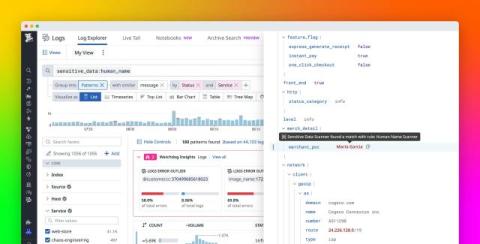
Detect human names in logs with ML in Sensitive Data Scanner

Modern applications generate a constant stream of logs, some of which carry more information than they should. For too many organizations, logs include personally identifiable information (PII) such as customer names that were never meant to leave production systems. Teams try to limit this data exposure by using regular expressions to detect and obfuscate matches, only to discover that names like John O’Connor, Mary-Jane, Jane van der Meer, and A. García slip through.

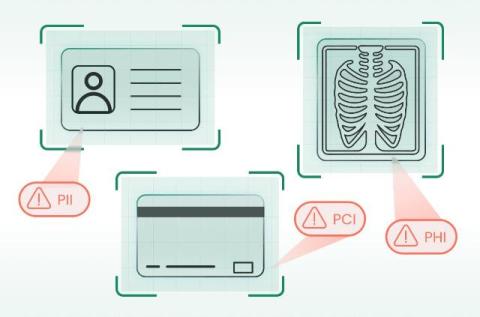
When Sensitive Data Becomes a Picture: Introducing ML-Powered Image Classification for DLP

Dr. Carter finishes a long shift at the hospital, exports a patient X-ray as a regular image file, and drags it into an AI assistant to double-check a diagnosis. The image included the patient’s name and ID. Across town, Jason, a travel agent, scans a stack of passports and uploads the images to an AI tool to automatically fill bookings. In a support center, Sarah snaps a quick photo of a credit card and sends it to an AI service to avoid retyping the number.

Save Time With GitGuardian's ML-Powered Similar Incident Grouping

GitGuardian is excited to introduce Machine Learning Powered Similar Incident Grouping, which cuts through the noise by identifying incident-specific patterns across your inventory and clustering incidents that belong together, so you can handle repetitive cases efficiently and reduce incident response toil.

Meet GitGuardian's Machine Learning-Powered Risk Scoring

The GitGuardian Platform now automatically ranks every secrets incident with a risk score from 0–100, turning alert floods into a prioritized, trustworthy work queue. Scores are computed from incident context (like validity, exposure, where it was found, and exploitability) and build on existing ML capabilities like Secret Enricher and our False-Positive Remover, which cuts false positives by 80%+.

Quantum Threats to Machine Learning: The Next Security Reckoning

At Exabeam, we’ve built our foundation on innovation in machine learning and artificial intelligence technologies that have transformed how organizations detect and respond to threats. We take pride in the rigor of our model security: encrypted data, tightly controlled access, continuous validation, and relentless red teaming. But true security isn’t about reaching a finish line; it’s about anticipating what’s next.