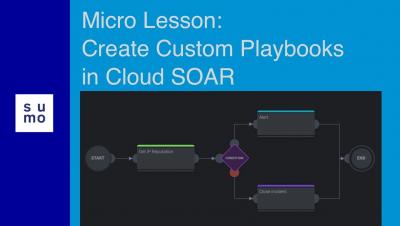
Micro Lesson: Create Custom Playbooks in Cloud SOAR
Learn how to automate the incident response cycle with a custom playbook in Sumo Logic Cloud SOAR.


Hack weeks and hack-a-thons are like foosball tables; if you don’t have them, are you even a tech company? These events, once revered for innovation, are now relegated to being blasé and often perceived as little more than playtime for engineers. As someone who’s worked in tech for longer than I care to admit, I had started to ignore them - until I came to Forward Networks.
The Medibank hack began with the theft of credentials belonging to an individual with privileged access to Medibank’s internal systems. These credentials were sold and purchased on the dark web by an unconfirmed buyer who used them to gain access to Medibank’s internal system.
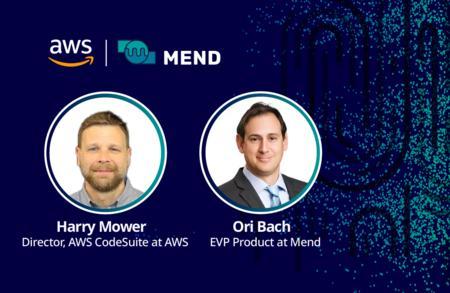
The modern approach to application security includes strategies and technologies that help development teams prioritize the vulnerabilities they should address and fix. By giving these teams tools that efficiently identify security vulnerabilities that present the biggest risk, they can address them as quickly as possible. Ori Bach, EVP of Product at Mend, and Harry Mower, Director, AWS CodeSuite, got together for a fireside chat to discuss how to implement these strategies.
The awaited OpenSSL 3.0.7 patch was released on Nov. 1. The OpenSSL Project team announced two HIGH severity vulnerabilities (CVE-2022-3602, CVE-2022-3786), which affect all OpenSSL v3 versions up to 3.0.6. These vulnerabilities are remediated in version 3.0.7, which was released Nov. 1. The vulnerabilities fixed include two stack-based buffer overflows in the name constraint checking portion of X.509 certificate verification.
The length of an average SOC 2 audit depends on a lot of variables, but with Vanta, customers can get a SOC 2 Type I report in weeks, and a SOC 2 Type II report within months. Audit timelines are difficult to project because each organization has different capabilities, resources, and goals. But after helping thousands of businesses tackle SOC 2 audits, we’ve developed a reliable timeline of what most customers can expect.
“Have you backed up your files?” If you had a Dirham for every time you heard this and followed up with immediate action, you’d be a Shiekh by now. But alas, we’re here because you didn’t do your due diligence and now you have to pay the ultimate price—your data has been compromised and you’ll have to decide what to do about it. But don’t feel too bad; data backup at a corporate level is a luxury not everyone gets to enjoy.