Security | Threat Detection | Cyberattacks | DevSecOps | Compliance

Discover latest security vulnerabilities in minutes with Detectify

25 minutes. That’s how long it took to bring high severity security vulnerabilities to Detectify Asset Monitoring customers from the moment they were discovered. On a more technical side, our Security Researchers, led by Tom Hudson, implemented a high priority vulnerability test to detect an Arbitrary File Read in VMware vCenter, and released it into production in this record time.

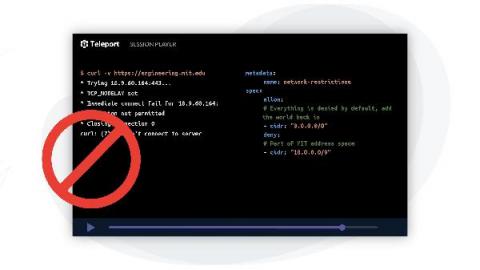
How to Set Up an SSH Jump Server

In this blog post we’ll cover how to set up an SSH jump server. We’ll cover two open source projects. Both of these servers are easy to install and configure, are free and open-source, and are single-binary Linux daemons. An SSH jump server is a regular Linux server, accessible from the Internet, which is used as a gateway to access other Linux machines on a private network using the SSH protocol.

Lookout and Verizon Committed to Protecting Small Businesses with the Launch of Business Mobile Secure

Our mission has always been to secure the mobile experience and for many in our current climate, that means protecting employees as they work from home. Verizon recently announced the launch of Business Mobile Secure, a full security solution designed specifically for small and medium business customers with Lookout mobile security at the helm of the bundle’s modern endpoint protection offerings.

5 Essential Steps to Improve Cybersecurity Maturity

From small- and medium-sized organizations to large enterprises, every business is under continuous threat of security risk in today’s digital world. With the growing digital footprint and cloud adoption, organizations continue to experience sophisticated cyberthreats that hold the potential to disrupt business continuity. A vast majority of these threats can go undetected, or they can be detected too late for an organization to avoid the exposure and the associated risks.

What Is Password Spraying, and How Can You Spot and Block Attacks?

In 2019, a data heist at Citrix shook the cybersecurity world. The attackers stole business documents from a shared network drive and from a drive associated with a web-based tool used in Citrix’s consulting practice. The hackers gained this access to Citrix’s IT infrastructure through a password spraying attack, a technique that exploits weak passwords, leading to criticism that the software giant needlessly compromised its clients by failing to establish a sound password strategy.

Phishing Emails - Less Ocean, More Aquarium

Here at Splunk, when we discuss Splunk Phantom with customers we end up talking about phishing pretty frequently because it’s something like Olivia outlined in a recent blog post, "Between Two Alerts: Phishing Emails — Don’t Get Reeled In!", customers both encounter and talk to us about all the time. It makes a lot of sense — phishing is a super common issue that almost everyone deals with ad nauseum and it’s annoying to investigate.

Biometrics: Improving Security for Working from Home

Biometrics has been around for a long time but has only had limited adoption until recently. I was involved in some of the early commercial biometric devices way back in 2000; the company I was working for at the time investigated the possibility of using them, but back then the false positive rates on the devices we investigated were way too high – either people could not authenticate or it was authenticating the wrong people.

Duped, deluded, deceived: How disinformation defrauds you

The rise of social media has no doubt been one of the major revolutions of the 21st century. It’s brought about a whole new way for people to connect and share information with others, regardless of their geographical locations. But along with these more noble intentions of social media, there will always be abuse of these platforms – and one of the big ones is the spread of disinformation.

njRAT Rising - The Increase in Activity of the Remote Access Trojan

First identified as active in November 2012, 'njRAT', also known as 'Bladabindi' or 'Njw0rm', is a well established and prevalent remote access trojan (RAT) threat that was initially created by a cybercriminal threat group known as 'Sparclyheason' and used to target victims located in the Middle East. Undoubtedly following the source code leak, reportedly in May 2013, njRAT has become widely available on the cybercriminal underground with numerous variants being released over the years.

Web Cache Entanglement - Novel Pathways to Poisoning

Each year we anticipate new research from James Kettle at the annual Black Hat USA event and he’s become known for his web cache research. This year he announced Web Cache Entanglement – new techniques to exploit web cache poisoning. We’ve previously covered his work concerning web cache poisoning and HTTP request smuggling which is intriguing for any software engineer to know about. This article will briefly highlight the main points about Web Cache Entanglement.