Security | Threat Detection | Cyberattacks | DevSecOps | Compliance

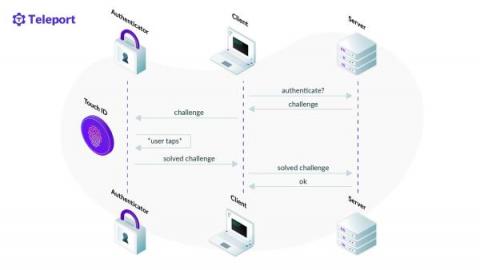
Russian Hackers Exploit MFA protocols and Print Spooler "PrintNightmare" vulnerability

A joint Cybersecurity Advisory (CSA) was issued by the Federal Bureau of Investigation (FBI) and Cybersecurity and Infrastructure Security Agency (CISA) recently warning organizations about a Russian state-sponsored cyber-attack. The cyber actors ran arbitrary code using system privileges by exploiting a Windows Print Spooler vulnerability, “PrintNightmare.”

EPP/EDR: What Is It and How Can It Help to Keep Your Organization Safe?

Endpoint devices played a big part in malware and ransomware attacks in 2021. According to a study covered by Help Net Security, security researchers detected more malware and ransomware endpoint infections in the first nine months of the year than they did for all of 2020. Attack scripts leveraging PowerSploit, Cobalt Strike, and other tools were particularly prevalent in that nine-month period, having grown 10% over the previous year after having already climbed 666% compared to 2019.

How to Combat Asset Blindness in OT Security

One of the main challenges of OT security is the problem of compatibility. OT components often differ significantly from each other in terms of age and sophistication as well as software and communication protocols. This complicates asset discovery and makes it difficult to establish a consistent cybersecurity governance approach. Combating asset blindness in OT security begins with taking account of these differences.

Weekly Cyber Security News 18/03/2022

A selection of this week’s more interesting vulnerability disclosures and cyber security news. For a daily selection see our twitter feed at #ionCube24. So many wonderful items to report on this week but limiting to three was a challenge. The first is a bizarre instance of a device literally talking to it’s self. Hilarious. Unless of course you end up with a massive bill for things you didn’t order…

NSA & CISA Kubernetes Hardening Guide - what is new with version 1.1

In March 2022, NSA & CISA has issued a new version of the Kubernetes Hardening Guide – version 1.1. It updates the previous version that was released in August 2021. Kubernetes evolves fast, and Kubernetes adoption grows even quicker. Kubernetes has become a very popular target and therefore requires continuous enhancement of the protection measures.

How to Stop Container Escape and Prevent Privilege Escalation

Container escape is a security risk in which malicious players can leverage a containerized application’s vulnerabilities to breach its isolation boundary, gaining access to the host system’s resources. Once an attacker accesses the host system, they can escalate their privilege to access other containers running in the machine or run harmful code on the host. Depending on how vulnerable the host is, the actor could also access other hosts in the network.

6 Reasons Cyber Insurance Prices Are on the Rise

What’s happening today in the cyber insurance market is comparable to what happens to property insurance in a region that experiences a major hurricane or devastating flood. Not only are your company’s premiums increasing; oftentimes, insurers are scrutinizing your overall risk preparedness as part of their renewal process. In the first part of this two-part series, we’ll examine why cybersecurity insurance premiums have skyrocketed.

Digital Experience Reimagined for the Cloud & Security Service Edge (SSE)

The transition to the cloud has changed everything! It has upended where apps are hosted, as well as the movement of enterprises’ most valuable digital assets and sensitive data. Access has been redefined and firewall-based perimeters are a thing of the past. Now special considerations are required for users working from everywhere—on both managed and unmanaged devices—as well as address the ever-growing Internet of Things (IoT).

dompdf security alert: RCE vulnerability found in popular PHP PDF library

Recently, researchers from Positive Security published findings identifying a major remote code execution (RCE) vulnerability in dompdf, a popular PDF generation library. In their reporting, they outlined a way that code could be loaded into an application and then remotely executed during a PDF being generated. Dompdf is used quite extensively within the PHP ecosystem, and is used within over 59,000 open sourced platforms and projects.

We need to bear in mind 5 key lessons when implementing a zero-trust model:

In today's ecosystems, a single enterprise can operate multiple internal networks, remote offices with their own local infrastructure, remote and/or mobile individuals and Cloud services. According to the study published by NIST, this level of complexity is too much for legacy network security models that are based on the location of the company infrastructure and there isn’t a single, easily identifiable perimeter for all elements.