US Offering a $10M Bounty For Info On Russian Ransomware Hacker
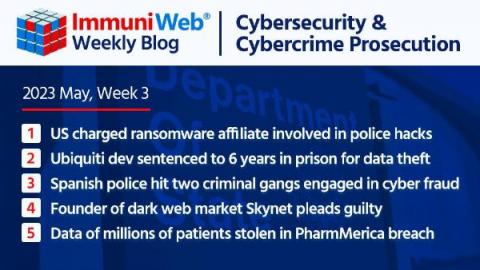
Read also: A former Ubiquiti dev sentenced to 6 years in prison, the PharmMerica breach affects millions of patients, and more.


Read also: A former Ubiquiti dev sentenced to 6 years in prison, the PharmMerica breach affects millions of patients, and more.
A selection of this week’s more interesting vulnerability disclosures and cyber security news. For a daily selection see our twitter feed at #ionCube24. Oh not a helpful thing to happen.
Trust is a serious issue facing enterprise architectures today. Legacy architectures are designed on implicit trust, which makes them vulnerable to modern-day attacks. A Zero Trust approach to security can remedy this risk, but transitioning isn’t always easy or inexpensive. CISA, the US government’s Cybersecurity and Infrastructure Security Agency, suggests a five-pillar model to help guide organizations to zero trust maturity.
Forrester has named CrowdStrike a Leader in The Forrester Wave™: Managed Detection and Response (MDR), Q2 2023 which recognizes how CrowdStrike’s “exceptional” Falcon Complete MDR service “blends products, platforms, and services seamlessly for customers.” Forrester evaluated 13 top MDR providers based on the strengths of their current offering, strategy and market presence.
Generative Artificial Intelligence (AI) has revolutionized various fields, from creative arts to content generation. However, as this technology becomes more prevalent, it raises important considerations regarding data privacy and confidentiality. In this blog post, we will delve into the implications of Generative AI on data privacy and explore the role of Data Leak Prevention (DLP) solutions in mitigating potential risks.
Netskope Threat Labs publishes a monthly summary blog post of the top threats we are tracking on the Netskope platform. The purpose of this post is to provide strategic, actionable intelligence on active threats against enterprise users worldwide.
For the second year in a row, Trustwave Government Solutions President Bill Rucker was honored by Meritalk with its Cyber Defenders Award. Rucker earned this award, from the federal government IT news and events provider, for driving innovation, advancing the nation’s cybersecurity, and making significant contributions across cyber programs in Federal IT.