Security | Threat Detection | Cyberattacks | DevSecOps | Compliance

CVE-2026-67401: SQL Injection in cPanel's EmailTrack Puts Shared Hosting Environments at Risk

A critical SQL injection vulnerability has been identified in cPanel & WHM’s EmailTrack functionality. The vulnerability was disclosed by cPanel on September 8, 2026, affecting every supported release line. It allows an authenticated cPanel account holder with mail related privileges to ultimately achieve root-level code execution on the underlying host.
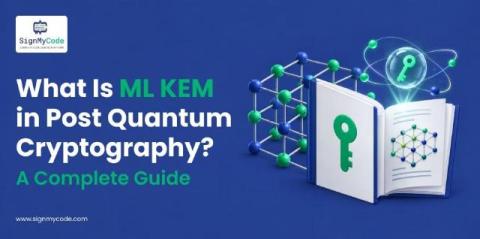

What is SLH-DSA? Hash-Based Post-Quantum Digital Signature Guide

SLH-DSA is NIST’s standardised post-quantum digital signature algorithm (hash-based). It generates quantum-resistant signatures, ensuring signatures are not changeable and that they will not be forged, even when later superseded by schemes like RSA and ECDSA, which are susceptible to attacks by quantum computers. Organisations are studying it today because large-scale quantum computers could, in the future, crack the algorithms that currently underpin most digital trust.

How Public VIN Records Become Part of Your Digital Footprint

When people think about online privacy, they usually consider email addresses, phone numbers, social media accounts, or browsing activity. Vehicle information rarely comes to mind. Yet a car can develop its own extensive digital footprint. A Vehicle Identification Number may connect publicly accessible auction listings, photographs, mileage readings, damage descriptions, specifications, and sale information that remain searchable long after the original event.

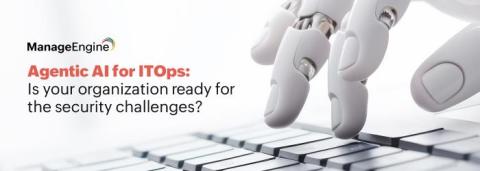
Agentic AI for ITOps: Is your organization ready for the security challenges?

AI is set to provide increasing value in IT by enabling more ways to simplify complex IT operations, offering actionable insights, automating routine tasks with context-aware automation, and detecting abnormal events with advanced machine learning algorithms. With agentic AI, systems can understand what is happening in an IT environment, reason about the most probable root causes, determine the right course of action, and implement these changes without requiring additional human intervention.

The 3 Layers of a Mature Software Supply Chain Security Program

There are lots of terms used to generalize what a mature application security program looks like. Find & Fix. Continuous Remediation. Code to Cloud, Unified Risk. The underlying message in these buzzwords is the same: security needs to be systemic. Defense in Depth is preached as a security best practice by leading cybersecurity agencies like NIST and CISA, and these principles are especially relevant to the metastasizing software supply chain risk seen across enterprises.

Attackers Have Changed Their Playbook. Has Your Security Strategy Changed With Them?

Cybersecurity teams have spent years preparing for malware, ransomware, and high-volume attacks. Yet the latest WatchGuard Global Threat Report reveals a more nuanced and potentially more dangerous reality: attackers are becoming quieter, more evasive, and increasingly reliant on stolen credentials, legitimate tools, encrypted communications, and long-known vulnerabilities. For MSPs and IT leaders, the challenge isn't simply understanding these trends.

Your Security Team Is Stretched Thin. Can AI Return the Hours?

The Arctic Wolf 2026 AI & Cybersecurity Trends Report asked security leaders how much time their teams spend each week on nine separate security tasks, and the answer came back between 13 and 15 hours for each one. That’s a workload that adds up to roughly three full-time people before anything unplanned arrives. Leaders are already acting on the problem.

Engineered for Trust: How We Built the AI Trust Engine

The rapid advancement of frontier AI models has fundamentally changed how security products are built. Capabilities that once took months to develop can now be delivered at machine speed, and the market is filling up with agentic security operations centers (SOCs). Numerous vendors now promise AI agents that can investigate alerts, correlate evidence, reason over complex signals, and even close incidents on their own. The technology appears capable, but what often gets left out is a reason to believe it.

The answer to AI uncertainty is adaptability, not paralysis

AI uncertainty is not a strategic reason to wait; it is a strategic imperative to build adaptable organizations that can innovate confidently, govern risk proportionately, and respond effectively as technology and threats evolve. Every few weeks, the AI conversation seems to reset around a new warning. A model demonstrates an unexpected capability. An autonomous agent behaves in a way its designers did not anticipate. A new forecast describes how quickly AI could transform work, security or society.