Security | Threat Detection | Cyberattacks | DevSecOps | Compliance

The latest News and Information on Security Incident and Event Management.

Gambling with Cybersecurity Is Not Worth the Risk

Members of the cybersecurity industry — including the Devo team — are gathering this week for the annual Black Hat USA conference in Las Vegas. Some will be present in person. Many others will participate virtually due to travel issues related to the pandemic. In either case, the latest edition of Black Hat, and its home city, have me thinking about cybersecurity and… gambling.

A Conversation with Mickey Perre, Devo Cybersecurity Strategist in ANZ

What is it about Devo that enticed you to join the company? If you look at my history, you’ll quickly realise I am passionate about two things: data and cybersecurity. One other passion that is not widely known is that I am a bit of a graph-processing fanatic. Solving problems in the modern security landscape isn’t just about collecting loads of data — which Devo does well — but how you can turn that data into actionable intelligence.

How to Securely Send Data to Your SIEM

Deploying a SIEM requires strategic planning. When deciding on a deployment, an organization must consider the level of risk it is willing to assume, what its security priorities are, and which use cases to implement. From there, your security operations team must thoughtfully identify their inputs — the data the SIEM solution will gather — before rolling out anything. Otherwise, you won’t obtain your desired outputs to identify high-fidelity alerts to act on.

How Orange Business Services is building a better SIEM with Elastic

I’m a security analyst at Orange Business Services in Paris, and one of my current projects for the Orange Group is implementing a new SIEM based on the Elastic Stack. In this blog post, I’ll share why we chose Elastic and how we were able to integrate Elastic into our existing SIEM, resulting in faster investigations and saving our engineers’ time. So follow along.

Log Analytics and SIEM for Enterprise Security Operations and Threat Hunting

Today’s enterprise networks are heterogeneous, have multiple entry points, integrate with cloud-based applications, offer data center delivered services, include applications that run at the edge of the network, and generate massive amounts of transactional data. In effect, enterprise networks have become larger, more complex, and more difficult to secure and manage.

What is a SIEM, And Why Should You Have One?

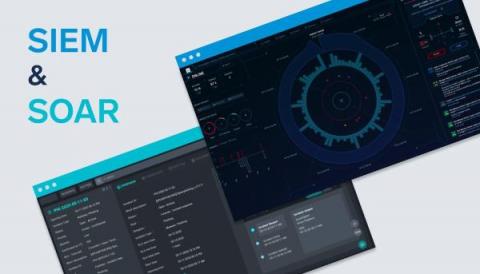
SIEM (pronounced like “sim” from “simulation”), which stands for Security Information and Event Management, was conceived of as primarily a log aggregation device. However, a SIEM’s primary capabilities are to provide threat detection, better enable incident investigation, and speed up your incident response time, while also giving you a unified, holistic view of your infrastructure.

How Devo Is Working with Google Cloud IDS to Deliver Greater SOC Visibility with Integrated Security Tools

As the only cloud-native logging and security analytics platform that enables organizations to take full advantage of all of their data to run and secure their business, Devo is committed to working with other leading security technology providers to bring advanced capabilities to our customers. That’s why we’re pleased to announce an integration with Google Cloud IDS.

Accelerate Hybrid Threat Protection Using Sumo Logic Cloud SIEM powered by AWS

It has been off to the races for the Sumo Logic and AWS teams since the general availability of the Sumo Logic Cloud SIEM powered by AWS solution on June 1, 2021. We are excited for the overwhelming response from customers from across all segments, industries and geographies.

The Top 14 Free and Open Source SIEM Tools For 2021

Security Information and Event Management (SIEM) is a combination of Security Information Management (SIM) and Security Event Management (SEM). A SIEM solution provides real-time analysis of security alerts generated by applications and networks. SIM is the collection, monitoring and analysis of security-related data such as log files into a central repository for trend analysis.