Security | Threat Detection | Cyberattacks | DevSecOps | Compliance

The EU's new AI Act-What We Can Learn From the GDPR

Artificial Intelligence (AI) is rapidly becoming ubiquitous in supporting key business decisions, and for many organisations it is critical for their digital transformation and new business models. With organisations quickly driving forward to identify new ways to extract competitive value from their data, the regulators are preparing to step in.

CCPA Compliance Vs CPRA Compliance

The California Consumer Privacy Act (CCPA) is a law that was signed on June 28, 2018, that established and promoted the consumer privacy rights and business obligations concerning the collection and sales of personal information of citizens of California. The CCPA came into effect on January 1st, 2020. Soon after in November 2020, Proposition 24, known as the California Privacy Rights Act of 2020 (CPRA) was introduced which is soon to replace the CCPA Compliance.

The 443 Podcast Episode 203 - USA's Answer to GDPR

This week on the podcast, we discuss the current cyber skills gab and a federal program designed to help combat it. After that, we dive in to the American Data Privacy protection Act and what it potentially means if passed by US Congress. We end this week with a quick update on Microsoft's attempts to protect users from malicious macro-enabled documents. The 443 Security Simplified is a weekly podcast that gets inside the minds of leading white-hat hackers and security researchers, covering the latest cybersecurity headlines and trends.

Special Category Data GDPR (General Data Protection Act)

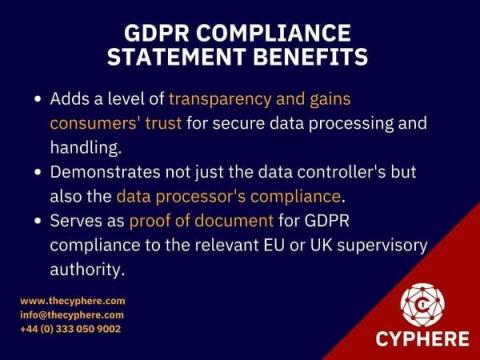
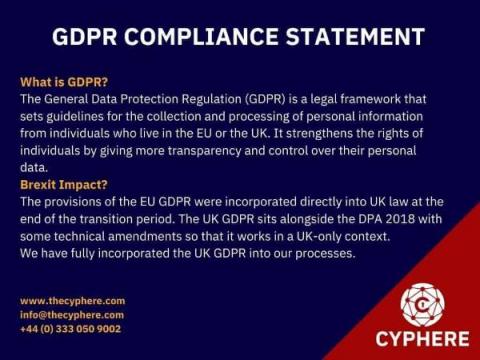
The General Data Protection Regulation is a data privacy law that protects the privacy of people of citizens of the EU and UK. The regulation is designed to protect the rights of individuals and also ensure the privacy of their personal data. The regulation outlines a detailed set of requirements for organizations collecting, storing, and managing personal data.

eIDAS 2.0: Latest News & Progress

Europe’s proposed eIDAS 2.0 regulation and the EU Digital Identity Wallet Initiative share a mission very close to our hearts at Avast — to enable secure, private, and portable digital identity for all. In this webinar, we invited a panel of private and public sector leaders to provide an update on the latest news and progress around the regulation. We covered the recent amendments, the technology that makes it possible, the role of qualified trust service providers (QTSPs), and the process for getting the legislation approved and written into law.

Compliance Guide: Third-Party Risk Management and the GDPR

The General Data Protection Regulation (GDPR) is one of the world’s most popular regulations. Though the European Union designed the GDPR to protect European citizens, its compliance transcends European borders, impacting most businesses collecting personal data via their websites - because you can’t control whether a European citizen accesses your website. Third-party vendors often require access to sensitive personal data to deliver their services.

GDPR privacy by default examples, privacy by design concepts

The General Data Protection Regulation, a GDPR, requires business entities to put appropriate technical and organisational measures in place and implement privacy-compliant procedures and processes. The need to implement the data protection principles is to guard the safety of customers’ default personal data and protect natural persons’ rights. This requirement leads to addressing the guide of data privacy by design and by default.

It's Time for a Federal Data Privacy Law in the U.S.

New state-level data privacy laws just keep coming. By the end of 2023, California will transition to the CPRA, and residents of Virginia, Colorado, Utah, and Connecticut will be covered by more expansive state privacy laws. With 10% of U.S. states covered by data privacy legislation by the end of next year, it’s clear there’s a need for federal legislation as well. I’m pleased to see reports of positive momentum on this topic in Washington.

Automate Data Mapping for GDPR and Other Data Privacy Laws

Whether you’re a compliance expert or a novice, adhering to data privacy laws confuses even the best of companies. One of the key points of confusion is the fact that you can’t possibly comply with current and future laws without knowing what data you collect, where it goes, and how it’s used and retained. It sounds simple, but it is not. In fact, it’s a challenge that applies to nearly every organization today.