Security | Threat Detection | Cyberattacks | DevSecOps | Compliance

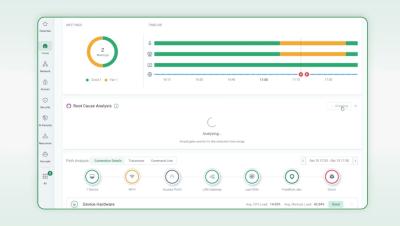
Cato DEM Root Cause Analysis: Find What's Slowing Down Your Applications

When users report slow application performance, where do you start troubleshooting? The Wi-Fi, ISP, network, or application itself? With Cato Digital Experience Monitoring (DEM), IT teams can move beyond guesswork and identify the root cause of performance issues using evidence from across the user-to-application path. In this demo, a user reports slow Zoom performance at a branch location. Watch how Cato DEM Root Cause Analysis investigates the issue, examines latency, jitter, and packet loss, and identifies the branch wireless LAN as the source of the slowdown. See how Cato DEM helps IT teams.
What Is a Virtual Ethernet Adapter in Hyper-V? | Beginner's Guide

Discover how a Virtual Ethernet Adapter in Microsoft Hyper-V enables virtual machines to communicate with each other and connect to external networks. In this beginner-friendly guide, learn what a virtual Ethernet adapter is, why it is important, and how to create and configure one in Hyper-V. Explore virtual switches, network connectivity, VLANs, and advanced adapter settings to better manage your virtual infrastructure.

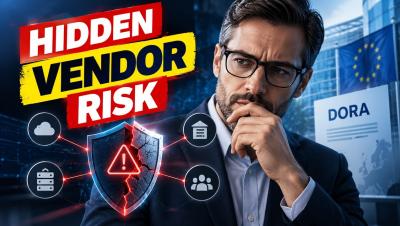
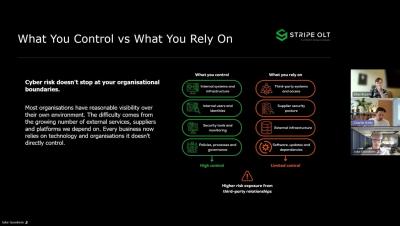
Can Your ICT Vendors Put Your DORA Compliance at Risk?

Can your ICT vendors put your DORA compliance at risk? Even with strong internal cybersecurity controls, third-party ICT providers can introduce operational resilience risks that financial institutions cannot afford to overlook. Under the Digital Operational Resilience Act (DORA) financial entities must establish effective ICT third-party risk management practices, including vendor oversight, due diligence, contractual arrangements, ongoing monitoring and appropriate contingency planning.

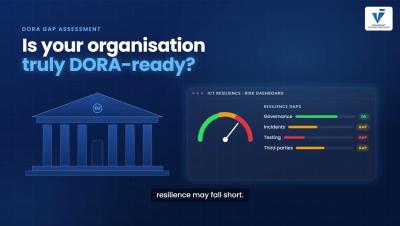
What Should a DORA Gap Assessment Include? Explained in 60 Seconds

Is your financial organisation prepared for the EU Digital Operational Resilience Act (DORA)? A DORA gap assessment helps financial entities identify weaknesses in their ICT risk management framework and understand what needs to be improved to meet applicable regulatory requirements. In this 60-second YouTube Short, VISTA InfoSec explains 5 essential areas to evaluate: ICT Risk Management – Governance, security controls, ICT assets and business continuity.

Expert panel: The AI agent has entered the chat

Every AI agent that acts on its own needs a login, access tokens, and permissions, which makes it a new kind of identity that has to be secured. Join our Notes From the Field panel for a live discussion of identity security. We’ll cover how attackers are using AI to target Active Directory and Entra ID, how to manage AI agents as identities, and which fixes defenders should prioritize.

System One and AI innovations at Netwrix

Everyone’s talking about System One models, AI built for fast, structured decisions rather than long-form text. Meet the Netwrix team behind our AI work and see how they’re putting it to use. Netwrix AI experts Jordan Violet, Jake Mahon, and Jean Perez join Netwrix Innovation Week to demo how we use System One to assess account health, verify whether documents actually contain sensitive data, and determine whether AI can safely merge a pull request.

Rubrik MSP Unscripted Episode 7 - Featuring Rajat Shah

In this episode of MSP Unscripted, Nawaz Ali sits down with Rajat Shah, Product Manager at Rubrik, to talk about the launch of multi-tenancy and what it means for managed service providers. Nawaz and Rajat discuss how shared infrastructure can help MSPs improve service economics while maintaining strong tenant isolation, expand opportunities across SMB and mid-market customers, and make services such as Backup as a Service, Disaster Recovery as a Service, isolated recovery environments, and advanced cyber recovery capabilities more scalable.