Security | Threat Detection | Cyberattacks | DevSecOps | Compliance

Top 14 Passwordless Authentication Solutions in 2026

We log into dozens of apps every day. Each one asks for a password, and some eventually force a password reset. Passwords create friction for users and risk for businesses because attackers can steal, reuse, or phish them. Passwordless authentication replaces this weak point with stronger ways to verify identity. A passkey, biometric scan, security key, or badge tap gives users another way to prove who they are.


What Is Privileged Session Isolation? How It Works in PAM

Access is just one part of security. What a privileged account does after logging in is equally important. Credentials can be compromised. Once inside, attackers move laterally, escalate privileges, and exfiltrate sensitive data without raising an alarm. Traditional network defenses like firewalls and VPNs are no longer reliable. VPNs grant broad network-level access, giving users a direct pipe into your core infrastructure.

Threat Lab Quarterly: August 2026

Netwrix formed a dedicated in-house Security Research team on July 15, 2025, led by Huy Kha, Director of Security Research. The team includes Senior Staff Security Researcher Darryl Baker, a recognized authority on Active Directory and identity security. They research identity, data security, AI, and cloud threats, with the goal of translating security research into practical improvements across Netwrix's product portfolio.

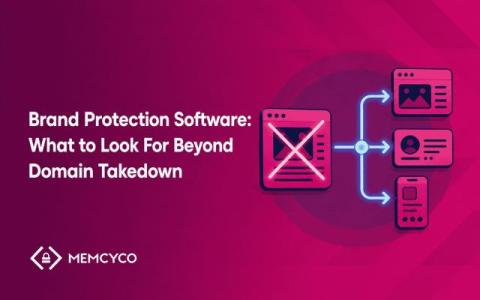
Brand Impersonation Protection Software: What to Look For Beyond Domain Takedown

Brand Impersonation protection software should do more than find and remove impersonating assets. Buyers should also examine what a platform helps their organization understand and do about the customer and business risk created while the campaign remains active. The Anti-Phishing Working Group recorded 971,181 phishing attacks in Q1 2026, up 13.8% from the previous quarter. Across monitored social platforms, impersonation accounted for 43.8% of threats. Takedown is necessary.

Why Your WAF Isn't Enough: Runtime Protection for AI Agents and APIs

Most security leaders believe their API attack surface is covered. A Web Application Firewall (WAF) sits in front of the application. An API gateway manages authentication, rate limiting, and schema validation. Some teams add a bot management layer on top. This looks like defense in depth. In practice, it repeats the same layer, the perimeter, multiple times. Most API breaches do not start with a WAF bypass.

How to define your third-party risk criteria

Accelerating security solutions for small businesses‍ Tagore offers strategic services to small businesses. A partnership that can scale‍ Tagore prioritized finding a managed compliance partner with an established product, dedicated support team, and rapid release rate. Standing out from competitors‍ Tagore's partnership with Vanta enhances its strategic focus and deepens client value, creating differentiation in a competitive market.

Human Risk Management Platforms: How to Choose the Right Software

Security leaders can no longer treat workforce cyber risk as a quarterly phishing campaign. Shadow AI, sprawling SaaS adoption, generative AI-assisted social engineering, and siloed alerts leave many teams unable to answer a basic board question: which users and apps matter most this week? Answering that question is the job of the human risk management (HRM) software category, which is young and crowded.

Security Event Management: A Practical Guide for Modern SOCs

A SOC can have broad telemetry, a modern SIEM, and a queue that still feels impossible to control. Analysts move between identity, endpoint, cloud, and network dashboards while low-confidence alerts accumulate. The problem usually isn't a lack of data. It's the missing operational layer that turns scattered events into decisions, investigations, and repeatable response. Security event management provides that layer.

Hypervisor Migration Risks: What to Know Before Planning a Move

Broadcom’s acquisition has every IT leader re-examining their virtualization stack. Per CloudBolt’s February 2026 survey of 302 IT decisionmakers, 86% are actively reducing their VMware footprint, but only 4% have fully completed the move, and over 50% have changed strategy twice or more since the acquisition. That gap between intent and actualization tells a very specific story. Migrating away from VMware isn’t easy and may not lead to the outcomes those leaders were expecting.