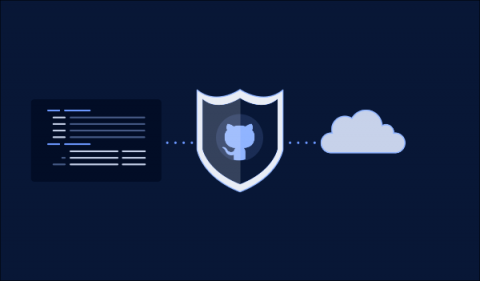
GitHub's Push Protection is now free for all public repositories, a significant milestone for open-source security! Find out the key points you need to keep in mind before using it to safeguard your code repositories.
If you read the news, you’ve encountered the term “Magecart” multiple times in recent years. The term refers to several hacker organizations that use online skimming methods to steal personal information from websites, most frequently customer information and credit card details on websites that take online payments.
Applications of machine learning have grown exponentially over the past few years and with it, the possibilities of malicious attacks targeting it through any vulnerabilities present.
We’re proud to announce that 1Password has been selected as one of 30 companies in the prestigious Enterprise Tech 30 list for 2023.
While IT executives understand the essential role privileged access management (PAM) solutions play in their organization’s overall security strategy, they’ve also continued to ask their PAM administrators to do more with less resources. To meet these additional asks, PAM admins have automated routine PAM tasks using scripts. PAM automation scripts can significantly lessen the burden on PAM admins and enable organizations to scale PAM usage across their entire enterprise.
Analyst report highlights how the Tanium platform overcomes cost, complexity, collaboration and user experience challenges.
A disaster recovery plan (DPR) is essentially a roadmap designed to manage the disruptions of an unforeseen incident (such as a data breach or ransomware attack). Many small businesses may not see the value in establishing a disaster recovery plan until it’s too late, leaving their data and their client’s data at severe risk. The likelihood of your business experiencing a cyber-attack is higher than you might think.
Classifying new and unknown (zero-day) malware has always been a challenge in the security industry as new variants are discovered in the wild at an overwhelming rate.
Once an adversary has compromised privileged credentials, for example, by exploiting an attack path, they want to make sure they don’t lose their foothold in the domain. That is, even if the accounts they have compromised are disabled or have their passwords reset, they want to be able to easily regain Domain Admin rights. One way to achieve this persistence is to exploit features of Active Directory that are intended to keep privileged accounts protected: AdminSDHolder and SDProp.