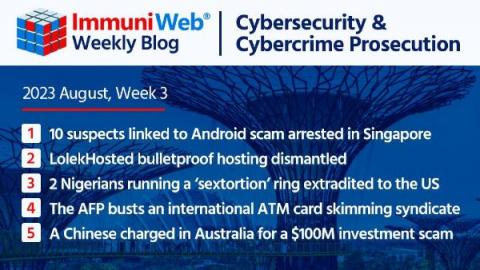
Singapore Police Arrested 10 Scammers Involved in a Fraud Targeting Android Users
Read also: Chinese national charged in Australia for a $100M online investment scam, Australia busts an international card skimming syndicate, and more.


Read also: Chinese national charged in Australia for a $100M online investment scam, Australia busts an international card skimming syndicate, and more.
Serverless architecture has increased in recent years, and is anticipated to grow by nearly 25% over the next decade, According to one source, the serverless architecture market was worth over $9 billion in 2022, with its compound annual growth rate projected to increase. The market could be worth over $90 billion by 2032. This indicates the immense amount of potential that this industry carries, influenced by the increasing adoption of DevOps by organizations.
Security researchers have identified that a widespread LinkedIn malicious hacking campaign has seen many users locked out of their accounts worldwide. Some users who have had their access to their LinkedIn accounts blocked by the cybercriminals changing their passwords have been pressured into paying a ransom, according to a report from Cyberint, and threatened with permanent account deletion.
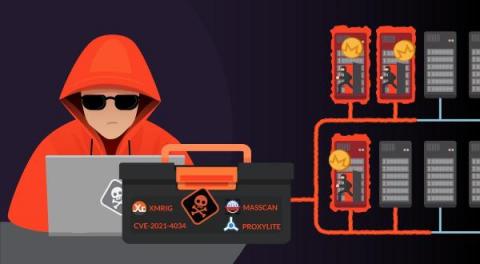
The Sysdig Threat Research Team (TRT) recently discovered a new, financially motivated operation, dubbed LABRAT. This operation set itself apart from others due to the attacker’s emphasis on stealth and defense evasion in their attacks. It is common to see attackers utilize scripts as their malware because they are simpler to create. However, this attacker chose to use undetected compiled binaries, written in Go and.NET, which allowed the attacker to hide more effectively.
The security of your organization’s data and systems is at the top. As a leading provider of operating systems and applications, Microsoft understands the criticality of safeguarding its customers’ sensitive information. With products like Windows, Windows Server, Microsoft 365 apps for enterprise, and Microsoft Edge, they strive to offer secure solutions that inspire confidence.
This post covers updates that could impact your development workflow. An imminent change is set to occur within the Microsoft ecosystem, explicitly involving the Microsoft author-signing certificate for NuGet packages. Scheduled for deployment as early as August 14th, 2023, this impending alteration warrants your attention to ensure the seamless continuation of your packaging and installation processes.
Bots are ubiquitous across the web. If your business has an online presence, it’s being targeted by automated attacks. So, it’s unsurprising to us at Netacea that in the Gartner Hype Cycle for Application Security 2023, bot management is classed as an early mainstream technology – less than two years from reaching full maturity. The nature and purpose of bot attacks depends on many factors including industry, seasonality, and even the functionality of the target.
Keeper Security has released the second part of a series of Privileged Access Management (PAM) research, Privileged Access Management Survey: Deployment Amid Economic Uncertainty, to understand how IT leaders are approaching, deploying and streamlining their PAM solutions. Keeper surveyed over 400 IT leaders globally, focusing on the impact of the global economic downturn on PAM deployments, and what IT leaders are prioritizing in PAM solutions given the current economic climate.
Imagine an intricate multiverse where each world holds endless possibilities. Now picture that same concept but for pharmaceutical research. Welcome to the Pharmaverse! Similar to the complex world of the multiverse, the Pharmaverse contains various solutions to explore, and each solution can be customized based on your data analysis needs. We first learned of the “Pharmaverse” during Mike Stackhouse’s session at the Egnyte for Life Sciences Virtual Summit.