Welcome to the 8th post in our weekly series on the new 2023 OWASP API Security Top-10 list, with a particular focus on security practitioners. This post will focus on API7:2023 Server Side Request Forgery (SSRF). In this series we are taking an in-depth look at each category – the details, the impact and what you can do about it.
Hybrid cloud takes the capabilities of the public and various private cloud options and merges them, allowing businesses to host different workloads within different environments depending on their performance, security, and resource needs. Companies leveraging a hybrid cloud strategy promote business competitiveness and agility, allowing them to respond to changes in resource demands quickly.
Imagine an AI overlord sitting in a dark basement, plotting world domination through cybercrime. While the idea might seem like a sci-fi flick, it’s actually closer to reality than we think. AI has emerged as a game changer in a constantly evolving cyber landscape. AI algorithms can learn and adapt to security measures quickly, making them the ultimate cyber villains.
Historically, MSPs have offered a broad portfolio of outsourced IT products and services, but not cybersecurity. Demand for security services from companies of all types and sizes is rising significantly now due to the steady rise in cyberattacks. According to a recent survey, 52% of MSPs state that cybersecurity is the most requested offering by customers. Adding security services to their portfolios gives MSPs the opportunity to reinvent themselves and access a broader customer base.
Earlier this year, analysts in the AT&T Cybersecurity Managed Threat Detection and Response (MTDR) security operations center (SOC) were alerted to a potential ransomware attack on a large municipal customer. The attack, which was subsequently found to have been carried out by members of the Royal ransomware group, affected several departments and temporarily disrupted critical communications and IT systems.
New data suggests that the gangs and toolkits behind current ransomware attacks are materially improving their abilities, resulting in a speeding up of attacks before defenses kick in. It’s the last thing we want to hear; the threat actors are winning. But, according to Sophos’ 2023 Active Adversary Report for Tech Leaders report – at least when looking at threat actor dwell time – it seems to be the case.
The use of lookalike domains has reached critical mass with not just one counterfeit website, but many. The second act of a phishing attack intent on tricking the victim into providing valuable information is the website they are taken to. It has to look and feel like the real thing. But it also needs to have a domain that doesn’t raise suspicion. Thus, the advent of lookalike domains.
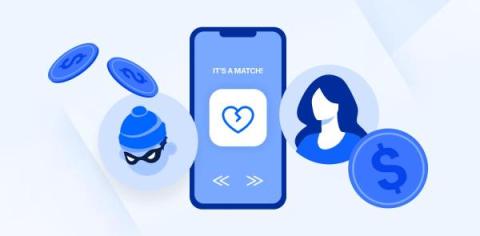
The Telekopye toolkit allows scammers to create phishing websites, send fraudulent SMS messages and emails, and target popular Russian and non-Russian online marketplaces. While toolkits are nothing new, the frequency, speed of time-to-market, and the functionality available to the “every-scammer” is becoming truly frightening.