Security | Threat Detection | Cyberattacks | DevSecOps | Compliance

Phishing Remains the Top Initial Access Vector in Cyberattacks Across Europe

Phishing was the initial access vector for 60% of cyberattacks across Europe between July 2024 and June 2025, according to the European Union Agency for Cybersecurity (ENISA). “With regards to the primary method for initial intrusion, phishing (including vishing, malspam and malvertising) is identified as the leading vector, accounting for about 60% of observed cases,” the agency says.

Protect Yourself From Voice Phishing Attacks Targeting Salesforce Instances

Google’s Mandiant has published guidance on defending against an ongoing wave of social engineering attacks targeting organizations’ Salesforce instances. The organized criminal gang tracked by Google as “UNC6040” has been using voice phishing attacks to trick employees into granting access.

How to Detect and Prevent JavaScript Injection Attacks on Websites

Most modern sites run significant third-party code in the user’s browser. The Web Almanac 2022 reports that the top 1,000 sites load an average of 43 third-party domains on mobile and 53 on desktop, expanding the surface for JavaScript injection attacks and supply-chain tampering. In parallel, real e-commerce compromises continue to surface. Sansec has identified more than 70,000 websites that suffered Magecart e-skimming over time.

How CrowdStrike Stops Living-off-the-Land Attacks

Adversaries have shifted their tactics away from traditional malware and toward approaches that exploit the very tools organizations rely on. Instead of introducing malicious files that can be blocked outright, attackers weaponize legitimate applications such as built-in Windows utilities, remote monitoring and management (RMM) tools, file transfer software, and administrative programs.

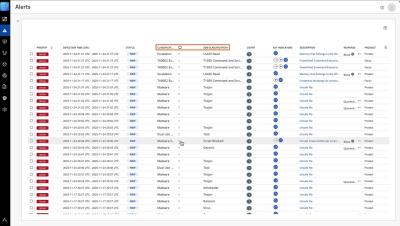
Stop Living-off-the-Land Attacks with Falcon Endpoint Security: Demo Drill Down

Modern adversaries have shifted away from traditional malware toward weaponizing legitimate tools like RMM software, Windows utilities, and administrative programs. These "living-off-the-land" attacks blend seamlessly into normal business operations, making them extremely difficult to detect with traditional security tools.

Understanding the Colt Attack

As Jaguar Land Rover (JLR) announces a return to operations after a six-week disruption, a lengthier, less publicised UK-based cyber-attack recovery remains unresolved. Perhaps the relative quiet is because Colt Technology Services, a critical connectivity and trading network serving major banks and stock exchanges in ~30 countries, is not a household name like JLR, Co-Op, or M&S. Or perhaps it’s because the narrative doesn’t fit the now-expected Scattered Spider storyline.

API Attack Awareness: When Authentication Fails - Exposing APIs to Risk

Authentication issues seem like low-level attacks. But authentication today – especially API authentication – can be more difficult than people expect. Companies rely on APIs to carry sensitive information every day. If access to those APIs is not properly secured, all the sophisticated security solutions companies use to protect their data elsewhere are completely undermined.

What's Going On at Salesforce? - The 443 Podcast - Episode 347

This week on the podcast, we discuss the wave of extortion attacks targeting companies that use Salesforce. After that, we discuss Discord's breach involving their customer support application. Finally, we dive deep into the recent Oracle E-Business Suite zero-day vulnerability and how attackers chained together multiple low-severity findings into a critical issue.

Understanding Account Takeovers

The identity attack surface is expanding faster than ever. Every new cloud application, remote login, and digital touchpoint creates another entryway threat actors can exploit, targeting the very credentials that give employees, customers, and partners access to critical systems. One of the top, tried-and-true identity attack techniques threat actors have utilized with great success is called an account takeover.