A new vulnerability CVE-2022-0811, alias cr8escape, with CVSS 8.8 (HIGH) has been found in the CRI-O container engine by Crowdstrike. This vulnerability can lead to arbitrary code execution. The container engines affected are: Any containerized infrastructure that relies on these vulnerable container engines is affected as well, including Kubernetes and OpenShift (version 4.6 to 4.10).
Today we’re pleased to announce an update to our popular Docker and Snyk vulnerability cheat sheet. Since 2020, millions of MacOS and Windows developers have been able to use docker scan to analyze their containers in their local environments as part of their day-to-day development. This capability gives teams feedback at the time of active development for faster cycles.
A few days ago it was reported that the new Apache version 2.4.53 contains fixes for several bugs which exposed the users of the well known HTTP server to attacks: CVE-2022-22719 relates to a bug in the mod_lua modules which may lead to Denial of Service after reading from a random memory Area, CVE-2022-22720 exposes the server to HTTP Smuggling attacks, CVE-2022-22721 exposes the server to a buffer overflow when handling large XML input, and CVE-2022-23943 is a vulnerability in the mod_sed module, whi
It’s open source, anyone can audit it, but is it safe? In this blog our CSO explores why distribution of malicious scripts via libraries is causing a stir amongst the open-source community and how you can defend against it.
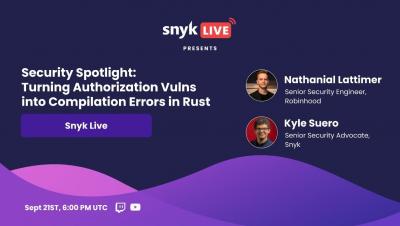
Authorization vulnerabilities allow malicious users to perform unwanted actions or access resources that are deemed protected otherwise. Authorization vulnerabilities are one of the most widely found vulnerabilities in web applications. The OWASP top 10 list of web application security risks listed broken access control vulnerabilities as the number one risk in 2021, so understanding authorization vulnerabilities is an important topic for application security engineers.
On March 15, 2022, users of the popular Vue.js frontend JavaScript framework started experiencing what can only be described as a supply chain attack impacting the npm ecosystem. This was the result of the nested dependencies node-ipc and peacenotwar being sabotaged as an act of protest by the maintainer of the node-ipc package.
The JFrog Security research team constantly monitors open-source projects to find new vulnerabilities or malicious packages and share them with the wider community to help improve their overall security posture. As part of this effort, the team recently discovered seven new security vulnerabilities in ClickHouse, a widely used open-source Database Management System (DBMS) dedicated to online analytical processing (OLAP).