Security | Threat Detection | Cyberattacks | DevSecOps | Compliance

The Future of Work: Enabling the Not-so New Normal

At this point in the pandemic, you’re probably tired of everyone referring to remote working as “the new normal.” Large companies like Facebook, Google, and Twitter have already announced that they will be working from home until the end of 2020 at the earliest, or as far out as August 2021. So, if these companies are any indication, we will all still be working from home for the foreseeable future.

Why Manually Tracking Open Source Components Is Futile

Open source is everywhere. Everyone is using it. Open source code is found in almost every proprietary software offering on the market and is estimated to make up on average 60%-80% of all software codebases in 2020. Why the proliferation? Open source libraries help developers write code faster to meet the increasingly shorter release cycles under DevOps pipelines. Instead of writing new code, developers leverage existing open source libraries to quickly gain needed functionality.

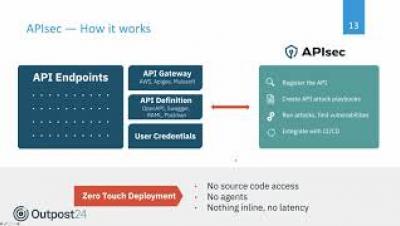
PSD2 & API Security

The second Payment Services Directive (PSD2) is a data-driven legislation introduced by the European Union (EU) in 2015, with which all payment service providers (PSPs) throughout the EU and beyond must comply. PSD2 expands the scope of 2007's PSD, a directive implemented to make payments across borders as easy, secure and inexpensive as domestic payments. However, a short eight years later, innovations in technology and the prevalence of fintech have created new challenges for the payments industry to address.

Dangerous Docs: Surge in Cloud-delivered Malicious Office Documents

The global pandemic caused an abrupt shift to remote work among enterprise knowledge workers, which in turn resulted in an increase in risky behavior. Attackers immediately tried to capitalize on the pandemic, with COVID-19-themed phishing emails, scams, and Trojans. At the same time, techniques used in more sophisticated cyberattacks continued to evolve.

Shadow IT shaken with a mobile twist

If you bring up the topic of “shadow IT” to your head of IT, you will likely get a lecture about how employees need to follow protocol when using cloud cloud services so they don’t put the organization at risk. They’re not wrong. Without proper protection, unsanctioned tools can have significant consequences and unintentionally introduce security gaps.

Leaky Images: Accidental Exposure and Malware in Google Photos and Hangouts

Did you know that the default link sharing option in Google Photos allows anyone with the link to view the files and all images shared in Google Hangouts that are publicly accessible? In this edition of our leaky app series, we will cover how image link sharing in Google Hangouts and Google Photos can lead to the accidental public exposure of sensitive data. We will also look at the threat detection capabilities of Google Photos and Google Hangouts.