Security | Threat Detection | Cyberattacks | DevSecOps | Compliance

The Latest Cybersecurity News & Insights From Around The World


Black Hat 2024 In Review - The Power of Unity
Black Hat 2024 has come and gone. The Nucleus team attending the show has (mostly) caught up on their sleep, which can mean one thing – a look back at the conference and our impressions of the event.

Beware of Auto-Install of Windows update KB5041571
The article released on August 13, 2024 regarding the security update for Windows 11 for hot fix KB5041571 discusses the new features and improvements to the operating system. The security update includes changes to the lock screen, NetJoinLegacyAccountReuse, Secure Boot Advanced Targeting (SBAT) and Linux Extensible Firmware Interface (EFI), and Domain Name System (DNS). The article also includes a servicing stack update to improve the reliability of the Windows update process.

Defending Healthcare: Trustwave's Dedication to Fight Cyber Threats to Patient Safety
Hospitals face a challenging dilemma: delivering the highest quality of medical care while shielding patient and family data from ever-evolving cyber threats, all while ensuring that critical operations continue uninterrupted. At Trustwave, we understand the immense pressure hospitals are under and are dedicated to creating a safer digital environment where healthcare providers can thrive, and patients receive the uncompromised care they deserve.

File-Sharing Phishing Attacks Increased by 350% Over the Past Year
File-sharing phishing attacks have skyrocketed over the past year, according to a new report from Abnormal Security. “In file-sharing phishing attacks, threat actors exploit popular platforms and plausible pretexts to impersonate trusted contacts and trick employees into disclosing private information or installing malware,” the report says.

Trustwave Rapid Response: Mitigate Windows TCP/IP RCE Vulnerability (CVE-2024-38063)
Microsoft has disclosed a critical (CVSS 9.8) TCP/IP remote code execution (RCE) vulnerability that impacts all Windows systems utilizing IPv6. To conduct this attack, threat actors can repeatedly send IPv6 packets that include specially crafted packets. By doing this, an unauthenticated attacker could exploit this vulnerability, leading to remote code execution. Systems that have IPv6 disabled are not susceptible to this vulnerability.

The Polar Bear in Your Kitchen: A Cybersecurity Analogy
Imagine for a moment that your home has a rodent problem. To address this, you install a fancy system designed to automatically detect and trap animals before they can roam around your house and cause any damage. The system seems to work well; from time to time, you arrive home to find a mouse or a squirrel caught by the device. No big deal, right? Lots of small critters about and the system is working as designed to catch them.

How To Hunt Insider Threats
An insider threat occurs when a legitimate user of an organization’s systems intentionally or accidentally puts the organization’s data at risk. These threats can have a devastating impact on a company’s data, reputation, and bottom line. Insider threat hunting has become essential to proactively identify and mitigate these risks before they escalate into full-blown security incidents.
Leverage GSMA compliance to drive secure firewall configurations with Firewall Analyzer
The GSM Association, which stands for the Global System for Mobile Communications Association and is known more commonly as the GSMA, developed the Security Accreditation Scheme (SAS), a security standard and audit-based certification program that addresses various aspects of eSIM production and management. ManageEngine Firewall Analyzer now supports GSMA compliance for mobile operators and companies within the mobile ecosystem.
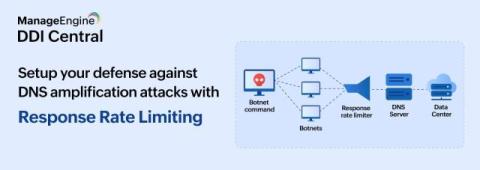
What is response rate limiting? How does it help in securing your critical network infrastructure?
Organizations often face different forms of cyberthreats and cyberattacks, and attackers try to get their hands on confidential data which would result in major loss of reputation, customer’s information, etc. So, organizations should implement networking tools to secure their data.