Security | Threat Detection | Cyberattacks | DevSecOps | Compliance

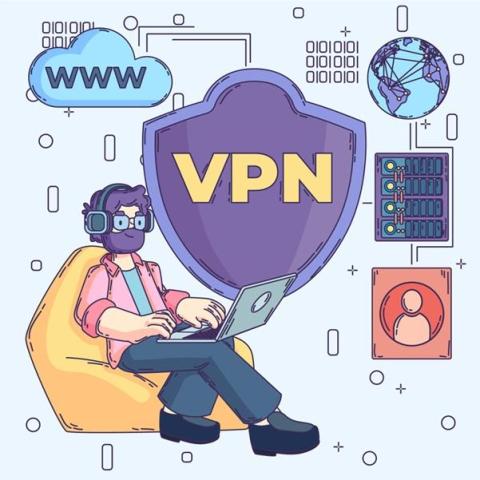
How To Implement Privileged Access Management in Your Organization

To implement Privileged Access Management (PAM), you must first assess your organization’s specific security risks and needs. Then, you can select the right PAM solution tailored to your organization and plan a strategic, phased rollout to ensure a smooth implementation. Continue reading to learn how to efficiently implement PAM in your organization.

Lumma Stealer is Out... of business!

Since mid-2024, Bitsight has been collaborating with Microsoft’s Digital Crimes Unit and other partners to dismantle the operational capabilities of Lumma Stealer (LummaC2) — currently the most widely distributed information stealer. Early this week, a coordinated action was carried out to disrupt its operations and take down the supporting malware infrastructure.

CISOs' Unconventional Criteria for Evaluating AI SOC Analysts

Noam Cohen is a serial entrepreneur building seriously cool data and AI companies since 2018. Noam’s insights are informed by a unique combination of data, product, and AI expertise — with a background that includes winning the Israel Defense Prize for his work in leveraging data to predict terror attacks. As the Head of Artificial Intelligence at Torq, Noam is helping build truly next-gen AI capabilities into Torq’s autonomous SOC platform.

The Next Generation of Full Stack Protection: Smarter Controls, Safer DeFi, and Full-Stack Protection

The crypto market has grown to over $3.2 trillion, driven by institutional adoption, stablecoin innovation, and a boost in DeFi activity. But every new dollar—and every new user—expands the attack surface potential. From credential stuffing and phishing, to malicious smart contracts and front-end exploits, today’s threat landscape is broader, faster, and more sophisticated than ever.

Powering the Next Era of Digital Value

Powering over 2,000 businesses and securing more than $10 trillion in digital asset transactions , we know what it takes not just to participate in this new economy — but to lead it. In the past 12 months, we’ve seen a clear shift. Crypto is entering the mainstream — and fast. With digital assets getting integrated into modern finance, the infrastructure supporting them must rise to the occasion — purpose-built for scale, security, and resilience.

Simplifying the shared responsibility model: How to meet your cloud security obligations

The shared responsibility model, introduced by AWS in 2011, defines the division of cloud security responsibilities between cloud providers and customers. Cloud providers are responsible for securing their physical infrastructure, while customers are responsible for securing their own data, configurations, and access. Cloud environments have grown and become much more complex since 2011.