Security | Threat Detection | Cyberattacks | DevSecOps | Compliance

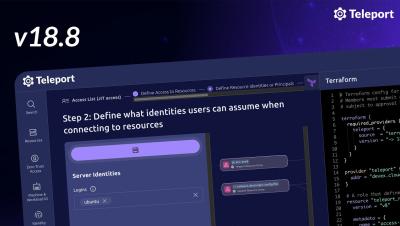
How to Protect Identity in a World Without VPNs

For years, cybersecurity relied on a perimeter-based model, where the network defined the boundary between what was secure and what wasn’t. With the adoption of cloud computing, SaaS applications, and hybrid working, that control has shifted to identity, making credentials the primary target for attackers.

Cyber Threat Intelligence Trends Financial Institutions Can't Ignore in 2026

Financial institutions face growing cyber risk as AI-driven attacks, cloud complexity, and regulatory pressure reshape the threat landscape. This blog explores the cyber threat intelligence trends shaping financial services in 2026 and what organisations need to prepare for.

The Rise of Continuous Penetration Testing-as-a-Service (PTaaS)

Traditional penetration testing has long been a cornerstone of cyber assurance. For many organisations, structured annual or biannual tests have provided an effective way to validate security controls, support compliance requirements, and identify material weaknesses across infrastructure, applications, and external attack surfaces.

Mobile App Release Readiness Checklist

Every mobile team has shipped an app that technically worked, and still caused problems. Sometimes it’s a last-minute App Store rejection. Sometimes it’s a privacy disclosure mismatch. Sometimes it’s a vulnerability discovered days after release, when rollback is no longer clean. The pattern is consistent, which isn’t a lack of tooling but a lack of release readiness clarity. Release readiness isn’t about perfection. It’s about answering one question with confidence.

Update: Arctic Wolf Observes Threat Campaign Targeting BeyondTrust Remote Support Following CVE-2026-1731 PoC Availability

Since our previous security bulletin, Arctic Wolf has observed malicious activities in the wild tied to suspected exploitation of CVE-2026-1731 of self-hosted BeyondTrust Remote Support and Privileged Remote Access deployments. We are sharing threat intelligence related to this activity to help defenders protect against this campaign. CVE-2026-1731 allows unauthenticated remote threat actors to execute operating system commands in the context of the site user via specially crafted requests.

Cross-platform Recovery: Key to Surviving the Next Outage

Outages recently disrupted 46% of organizations just in 2025, yet 47% of executives still rate their resilience as high, according to a SAS report. In other words, despite nearly half the industry facing service failures, almost half still believe they’ve solved the problem. It seems surprising. The more so in times when a single outage or vendor lock-in can halt all operations on a given platform.

Why Every Website Needs a Reliable URL Checker

Links are the connective tissue of the web. They guide users to content, help search engines understand structure and distribute authority across pages. When links fail, everything from user trust to search visibility can suffer. This is where a URL checker becomes essential. A URL checker is more than a quick "does this page load?" tool. At its most basic level, it confirms whether a URL resolves successfully. At a deeper level, it reveals status codes, redirect chains, DNS issues and server errors that aren't obvious from simply clicking a link.

The 3 Types of Criminal Hackers

Criminal hacker groups fall into three broad camps, from ideologically driven actors attacking targets they dislike, to profit focused crews and state backed operators hiding behind deniability. Money driven groups dominate the landscape, yet all three types break systems, disrupt services and shape the threat model security teams face. ⸻ For more information about us or if you have any questions you would like us to discuss email podcast@razorthorn.com. We give our clients a personalised, integrated approach to information security, driven by our belief in quality and discretion..

The AI SOC Org Chart for 2026 and Beyond

See how Torq harnesses AI in your SOC to detect, prioritize, and respond to threats faster. Request a Demo John White is the Field CISO for EMEA at Torq. A respected security executive with more than 20 years of leadership experience, John previously served as CISO at Virgin Atlantic, where he led a multi-year transformation deploying the Torq AI SOC Platform to modernize cyber operations.