Security | Threat Detection | Cyberattacks | DevSecOps | Compliance

How Autonomous Pentesting Makes Hunting Business Logic Vulnerabilities Cheaper

For the ten years I have watched this industry, hunting business logic vulnerabilities has been notoriously expensive and exceedingly difficult. Every attempt to bring the cost down has hit the same wall. Now, for the first time, we as an industry have the capability to meaningfully lower the ceiling on what this work costs. I would argue Astra’s autonomous pentesting platform is pioneering that shift.

LearnUpon Pricing: What Influences It?

LearnUpon pricing requires a direct conversation because the published listing does not show a fixed starting rate or package breakdown. The available information identifies a subscription-based, paid Learning Management System (LMS) model with no free trial and directs prospective buyers to contact the provider. Understanding these details early helps avoid budget surprises later.

Why SOC Teams Need Runtime Visibility From Their CNAPP

Many companies run their software on cloud servers that come and go on their own. When traffic spikes, new ones switch on automatically. When it drops, they shut down, sometimes less than an hour after they started. That flexibility saves money, but it creates challenges for the people whose job is to investigate attacks.

How to Choose the Right Local Security Contractor for Your Business

There are thousands of commercial break-ins reported every year across urban business districts, leaving vulnerable companies facing devastating financial losses and severe operational downtime. Protecting your physical assets, inventory, and employees requires more than just locking the front door after hours. Business owners must look closely at who they trust to secure their premises against evolving threats. Evaluating local security partners carefully prevents costly missteps and ensures long-term safety for your enterprise against professional intruders.

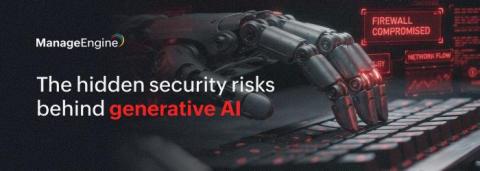
Generative AI security risks every enterprise should prepare for

Over time, we have become increasingly accustomed to using AI in our daily work. We send customer data to ChatGPT for analysis, share customer emails to draft responses, or ask Claude to generate code for enterprise applications. All of this can happen within an enterprise environment. This is what generative AI is designed to do. It creates content for us, from text and code to images and videos.

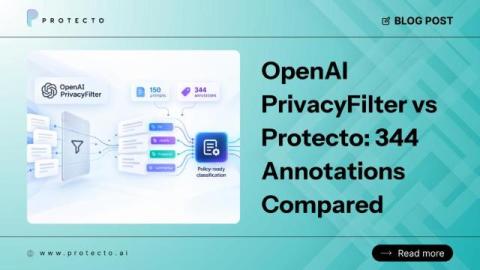
OpenAI PrivacyFilter vs Protecto: 344 Annotations Compared

Most evaluations of a PII protection layer ask one question: did it find the sensitive data? That was the right question when data loss prevention meant blocking. A DLP system that found a Social Security number stopped the email, and nothing downstream needed to understand what had been stopped. AI workflows are different. Sensitive data can enter through prompts, tool calls, retrieved RAG context, agent memory, and model outputs, including paths that may sit outside traditional DLP inspection points.

Shadow IT Was Just the Beginning. Meet Shadow Automation.

Most security leaders remember the first time they discovered shadow IT inside their own organization. A business team had adopted a SaaS application, connected it to company data, and built a workflow around it before anyone in security knew it existed. The tool was useful, and the team was productive. The governance conversation simply started months late. The agentic enterprise is creating a more consequential version of that problem.

Why Machine-Speed Risk Demands an AI-Assisted SOC

Security analysts traditionally move from an alert to a pivot, a search, a correlation, more pivots, and finally documentation before they can decide what to do. An AI-assisted workflow brings behavioral context, prioritized investigations, search timelines, and automation together, so analysts can review, validate, decide, and respond with far less manual friction. Exabeam Nova AI drives that shift, and the analyst stays responsible for validation and action.

Agentic Data Security: How Cyberhaven Secures Agent Workflows

Agentic workflows move sensitive data through systems that most security tools never see. This walkthrough follows one workflow from start to finish. A user shares customer data with an agent, the agent calls Model Context Protocol (MCP) servers to enrich its analysis, and the combined dataset is saved locally and shared through email, web upload, and USB. The video runs the workflow once without protection, then runs the same workflow again with Cyberhaven in place.