
Security | Threat Detection | Cyberattacks | DevSecOps | Compliance

How to Identify, Avoid, and Protect Against Counterfeit Software Product Keys

Software product keys are essential tools used to verify ownership and secure software usage. These keys function as unique access codes that grant authorized users permission to install and activate licensed software. Choosing legit software product keys ensures users receive reliable access while reducing the risk of malware or invalid licensing. By protecting intellectual property and reducing piracy, they allow developers to maintain control over distribution and ensure that only legitimate users gain full access. Additionally, product keys support user authentication and enable access to software updates or additional features.

Is Your Rented Server Safe Enough?

We get it-you've rented a server. Whether it's for your business, your app, your game, or just that brilliant startup idea you're nurturing, renting a server feels like leveling up. It's exciting, empowering... and terrifying. Because the moment that server is online, it's visible to the entire internet. Including the bad guys. Hackers, bots, DDoS armies, and other digital troublemakers don't care that it's "just a test project." If it's online, it's fair game. So, how do you protect it?

Jit Now Supports On-Prem and SaaS Versions of GitHub, GitLab, Bitbucket, and Azure DevOps

Security experts dedicated to shaping insightful editorial content, guiding developers and organizations toward secure cloud app development. Dive into a wealth of knowledge and experience in fortifying software integrity. Modern development teams work across a range of environments — some in the cloud, others in on-premise setups. Until now, security tooling hasn’t kept pace with this hybrid reality.

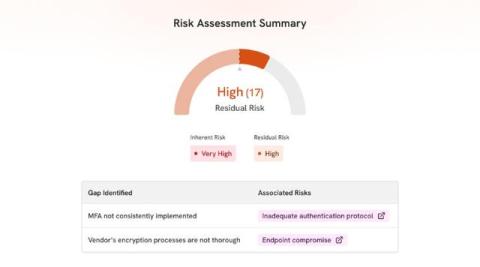
Predictive risk assessment: Preventing security incidents

Organizations are facing an increasing array of security challenges these days that can disrupt operations, lead to significant financial losses, and damage reputations. Traditional reactive security measures are no longer sufficient. Instead, a strategic focus on proactive security is essential. Predictive risk assessment stands at the forefront of modern security approaches, offering a comprehensive framework for identifying vulnerabilities before they are exploited.
Featured Post

Navigating Operational Resilience Regulation in Cloud Computing

The rate of adoption for cloud computing has grown steadily across many industries, driven by the need for flexibility, innovation and cost efficiency. One of the key verticals that has fully embraced cloud technology is the financial services sector. Cloud is particularly suited to this industry as it allows for more efficient storage, faster processing of large amounts of data, and consolidation of records which gives firms the ability to accurately analyse data.

Fake MFA Reset Warning Message

A KnowBe4 co-worker of mine recently got this SMS phishing message (i.e., smish). They quickly identified it as a social engineering attack and shared it on our internal communication channel for sharing such things. I have had more and more of these types of similar smishes occurring over the last few months. It is an attempt to trick someone into worrying that their Gemini, Gmail, Microsoft, Instagram…or whatever account…is in the middle of being compromised and you need to react NOW! NOW!

What Are The Key Components Of A Successful Human Risk Management Program?

When it comes to cybersecurity, organizations face an ever-present and often underestimated threat: human risk. Despite significant advancements in technological defenses, human error remains a leading cause of data breaches and security incidents. Industry studies consistently show that between 70% and 90% of data breaches involve some form of human-related cause—whether through social engineering, errors, or misuse.

Simplify API Security with Salt Ecosystem Integrations

APIs are essential, but they also represent a growing and complex risk to your organization. Intricate application architectures and an ever-evolving threat landscape already make API security a constant challenge. The increasing reliance on APIs by new technologies, including AI, further amplifies this risk.