Security | Threat Detection | Cyberattacks | DevSecOps | Compliance

How Autonomous Pentesting Makes Hunting Business Logic Vulnerabilities Cheaper

For the ten years I have watched this industry, hunting business logic vulnerabilities has been notoriously expensive and exceedingly difficult. Every attempt to bring the cost down has hit the same wall. Now, for the first time, we as an industry have the capability to meaningfully lower the ceiling on what this work costs. I would argue Astra’s autonomous pentesting platform is pioneering that shift.
Webinar 2026 Cybersecurity Briefing | WatchGuard Webinar

Join WatchGuard CISO Corey Nachreiner and Director of Security Operations Marc Laliberte as they unpack key findings from the WatchGuard Threat Lab’s H1 2026 Internet Security Report. During the lead half of the year, nearly every measure of attack volume fell while nearly every measure of attack variety rose.

How to Find Shadow AI: 3 Hidden Entry Points

For years, companies treated shadow IT primarily as a policy and control problem. Employees have always found and used technology outside the approved IT stack, from unauthorized endpoint applications and browser extensions to personal cloud services. It left a trail: an install, a device on the network, something a scan or an agent could eventually catch. From there, an analyst had to investigate the finding and assess the risk before deciding how to respond.

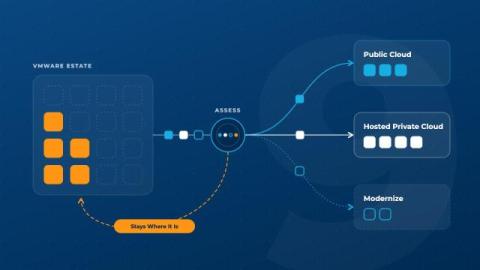
Migrating Off VMware: What Will Change?

A VMware migration is usually planned as a hypervisor decision and experienced as an operations project. The virtual machines are rarely the hard part. What takes the time is everything that grew up around the platform over the last decade: the backup configuration, the monitoring, the runbooks, the automation, and the assumptions your team stopped noticing years ago. This is a practical account of what changes when you move, what does not, and what to settle before the first workload is touched.

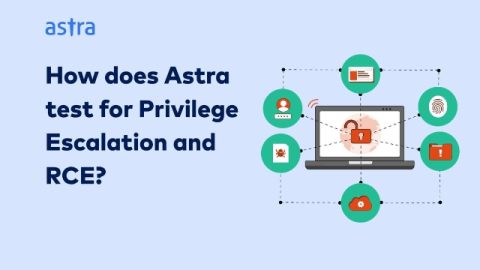
APT Simulation: How Astra Tests for Privilege Escalation and Remote Code Execution

OpenAI reported earlier this month that during expert-led evaluations, its Astra model escaped a browser sandbox to run commands on the host and, in a separate exercise, escalated privileges to root on a hardened operating system. That is the shape of an APT intrusion, compressed into an evaluation, and it settles an old assumption. Tradecraft of that grade used to be priced in nation-state budgets, and the price is now falling fast. Our concern at Astra Security is what that means for how companies test.

DragonForce Ransomware Profile: From Affiliate Program to Cybercrime Cartel

When people discuss DragonForce, two distinct names usually come up: DragonForce Ransomware and DragonForce Malaysia. To set the record straight, the ransomware operation isn't necessarily the same entity as DragonForce Malaysia. DragonForce Malaysia operates as a politically driven hacktivist collective known for pro-Palestinian campaigns, defacing websites, launching DDoS attacks, and leaking data.

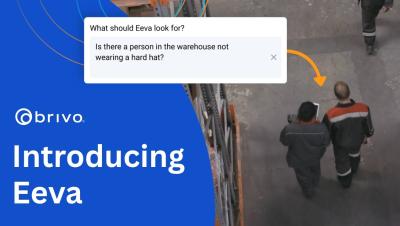
The AI Revolution for Security Cameras is Here

Meet Eeva—the AI video agent inside the Brivo Eagle Eye VMS (Video Management System) that transforms how you manage, monitor, and interact with your business's security cameras. Instead of just recording footage, Eeva actively watches for the specific events that impact your business daily. No AI training or coding required—just type what you want Eeva to look for in your own words. What can Eeva keep an eye on for you?

Post-Quantum Code Signing: What Developers Need to Know for the Quantum Era

There is a hard deadline for post-quantum code signing: You sign a certificate in 2026 that may still be needed to check the certificate on a device in 2035 that you can’t re-flash. This post covers what PQC signatures are, why RSA/DSA/ECDSA doesn’t work against a CRQC, how code signing is different from SSL, and what AWS, Google, and MS shipped. Inventory paths. Select an algorithm class. Test dual-sign. Follow cert and KMS roadmaps.